Tem lhawt’: Time to Feast
The Generosity of Pacific Herring
Pacific herring are an extraordinarily generous fish. They feed animals that live in the air, the water, and on land. A keynote species in our coastal, temperate ecosystem, Pacific herring are a critical component to the food web wherever they live.
Welcoming the Time of the Herring
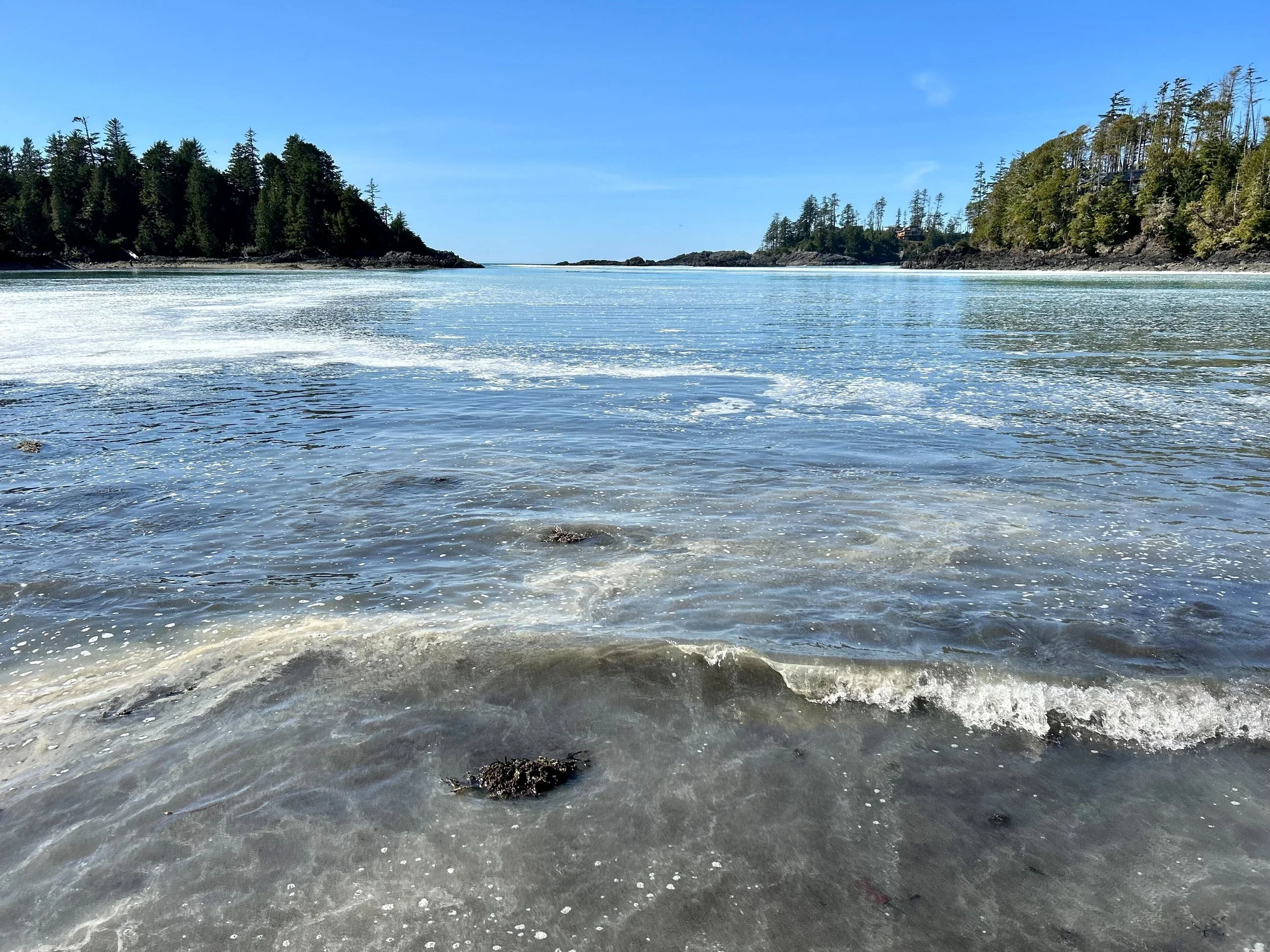
Tem lhawt’, meaning time of the herring in Sḵwx̱wú7mesh sníchim, is almost upon us. This is the month of March. It is a sacred time of the year to honour the return of each spawning herring and to welcome them back to hospitable shores. Whispers of anticipation are carried on every tidal exchange as winter softens bringing more sunlight with each passing day. It’s time to prepare for a great feast!
A Potlatch Hosted by Our Non-Human Relatives
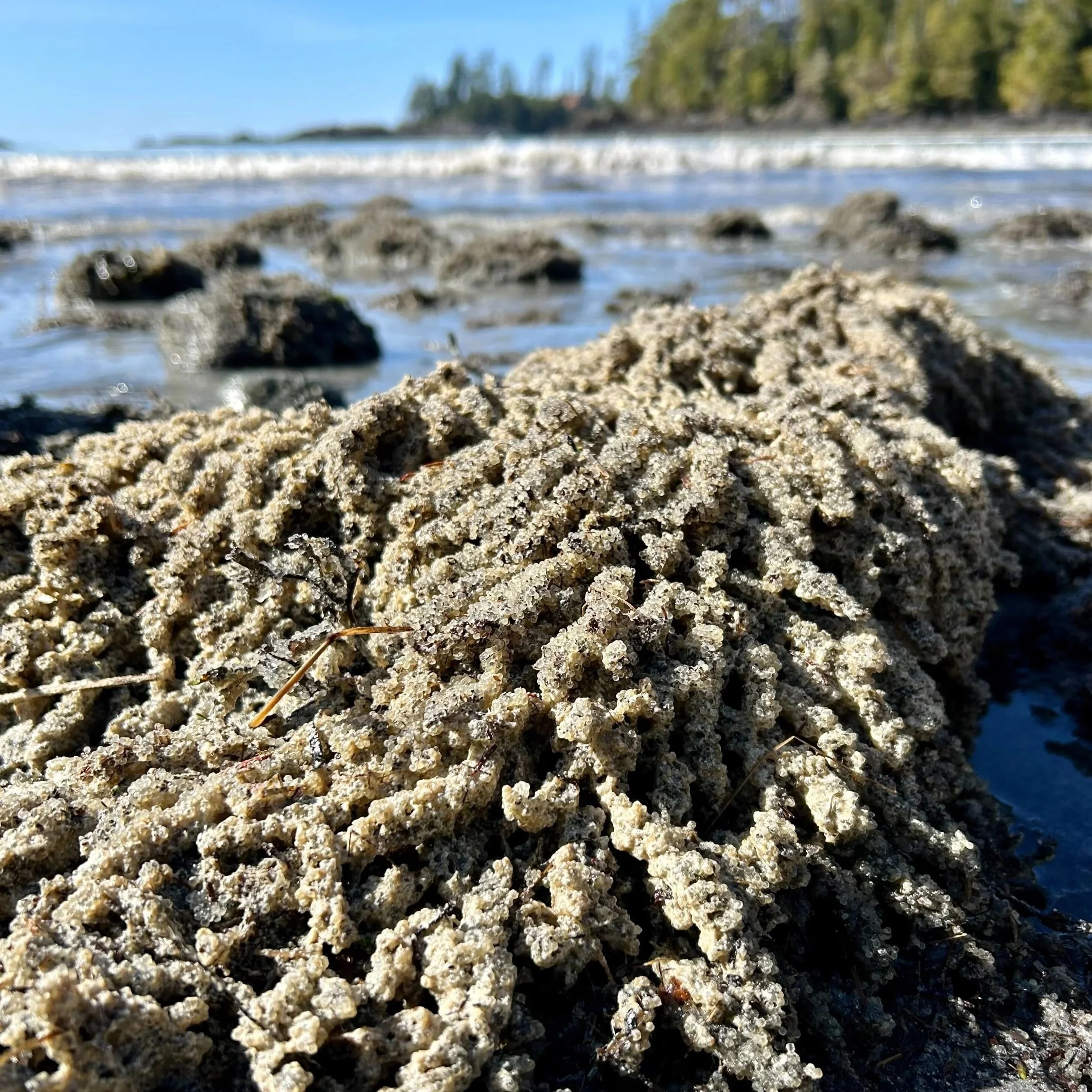
This particular type of potlatch, however, will be catered by our non-human relatives, the iconic Pacific herring. Some guests will travel hundreds of kilometers to attend this annual celebration as many Indigenous peoples have done throughout the centuries. Whales, seabirds, wolves, humans and many more, coming together to share in the decadence of herring and their roe.
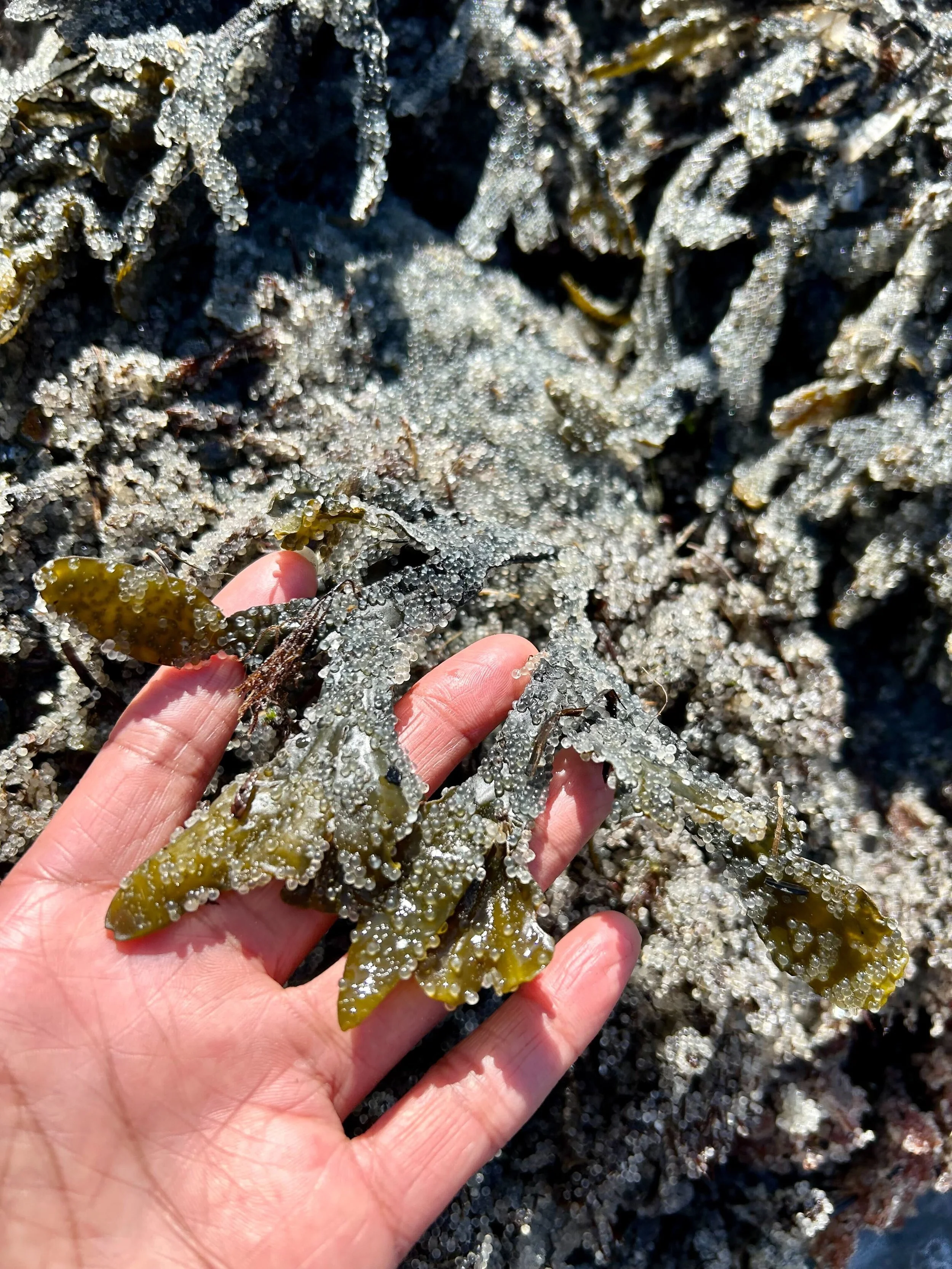
Pacific Herring Roe
Close view of roe clustered on shoreline rock.
The Gift Economy of Reciprocity
I think of the bounty of this spawning event as part of the gift economy, collectively practiced by countless generations of species thriving together in reciprocal relationships. I imagine days, precontact, where Indigenous peoples would bring gifts of ḵwáýtsay, or western hemlock branches to the shore in anticipation of the return of the spawning herring - a loving act of reciprocity.
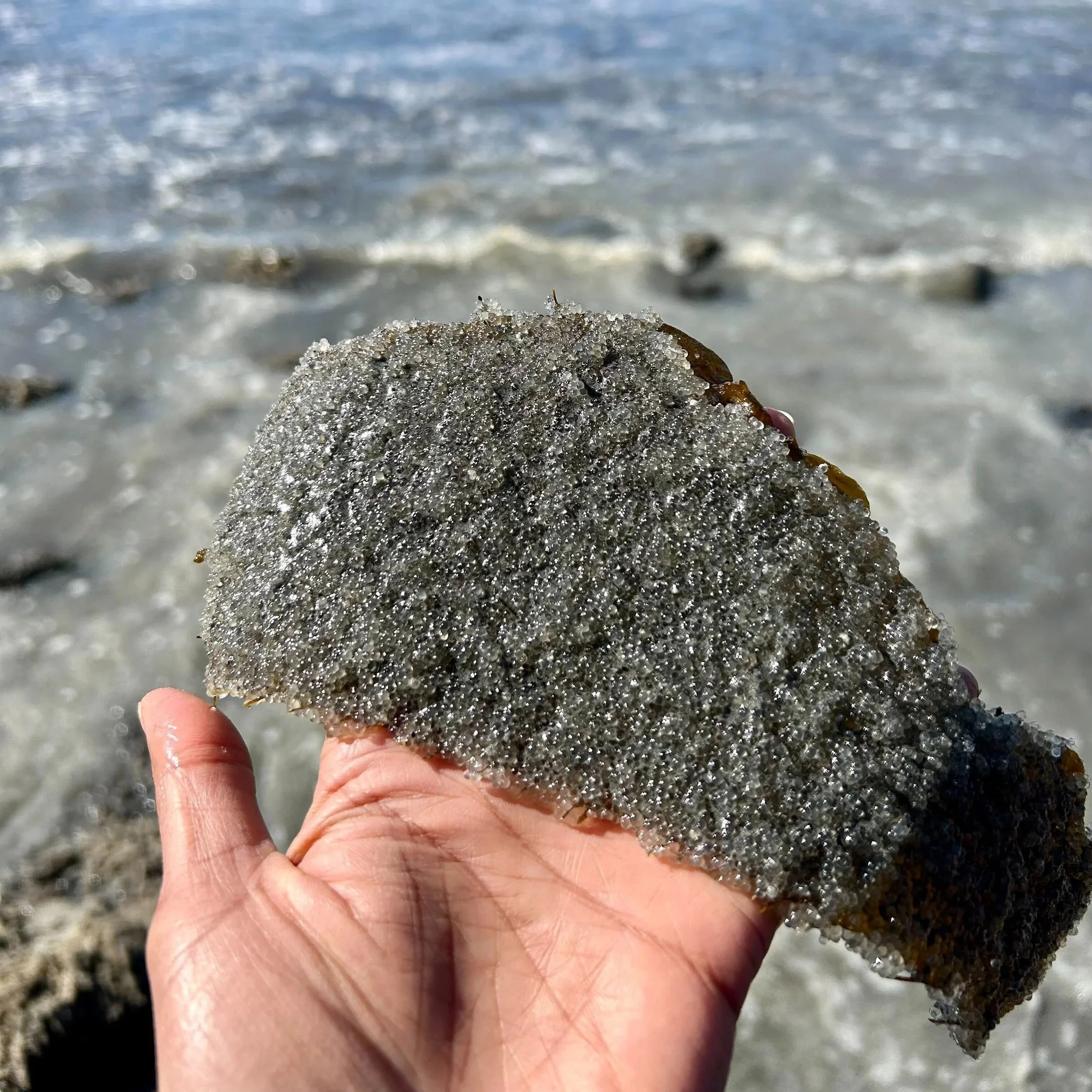
Kelp as Anchors
Herring roe layered on kelp during the early spring spawn.
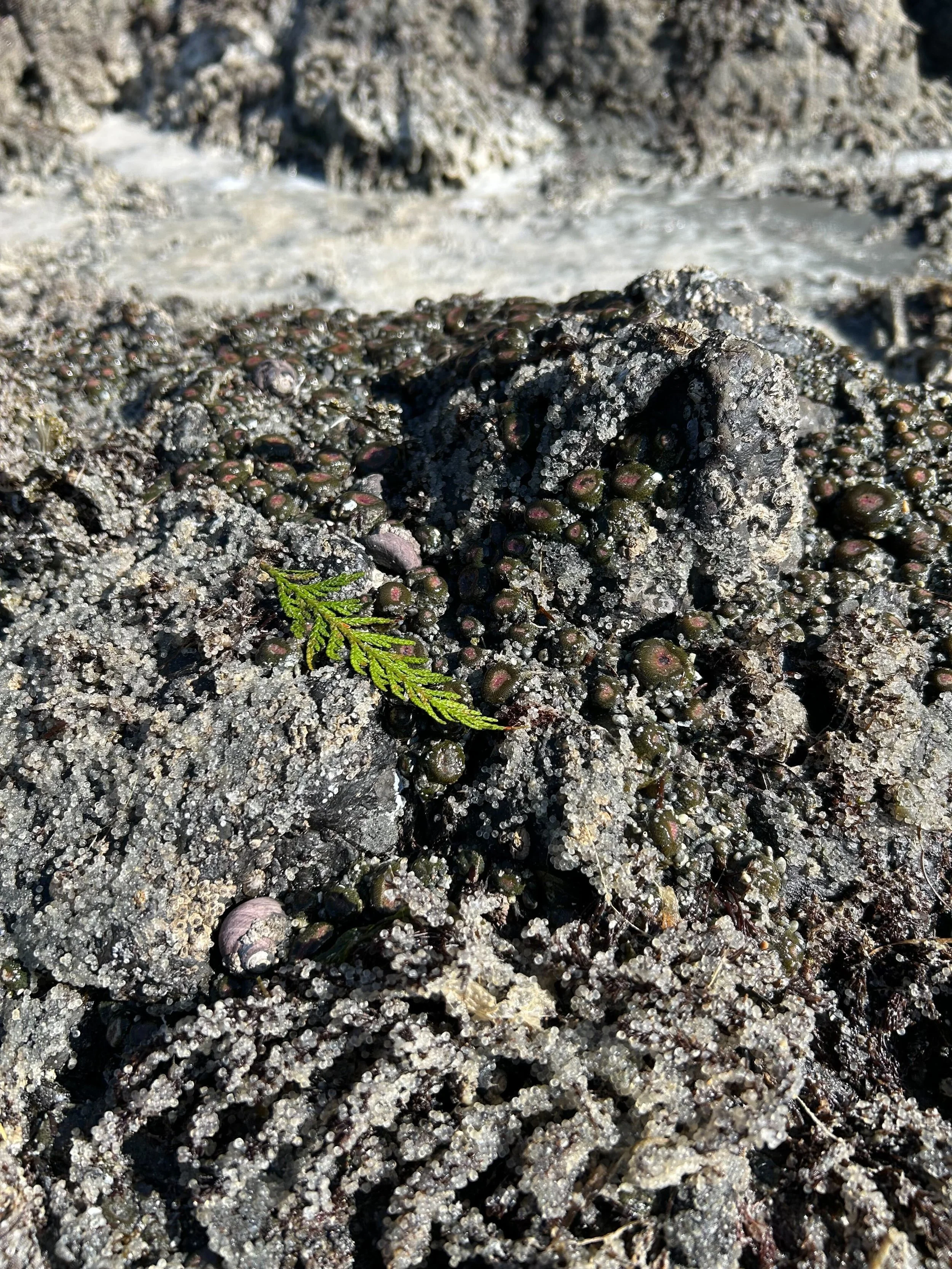
Ḵwáýtsay: A Welcoming Place for New Life
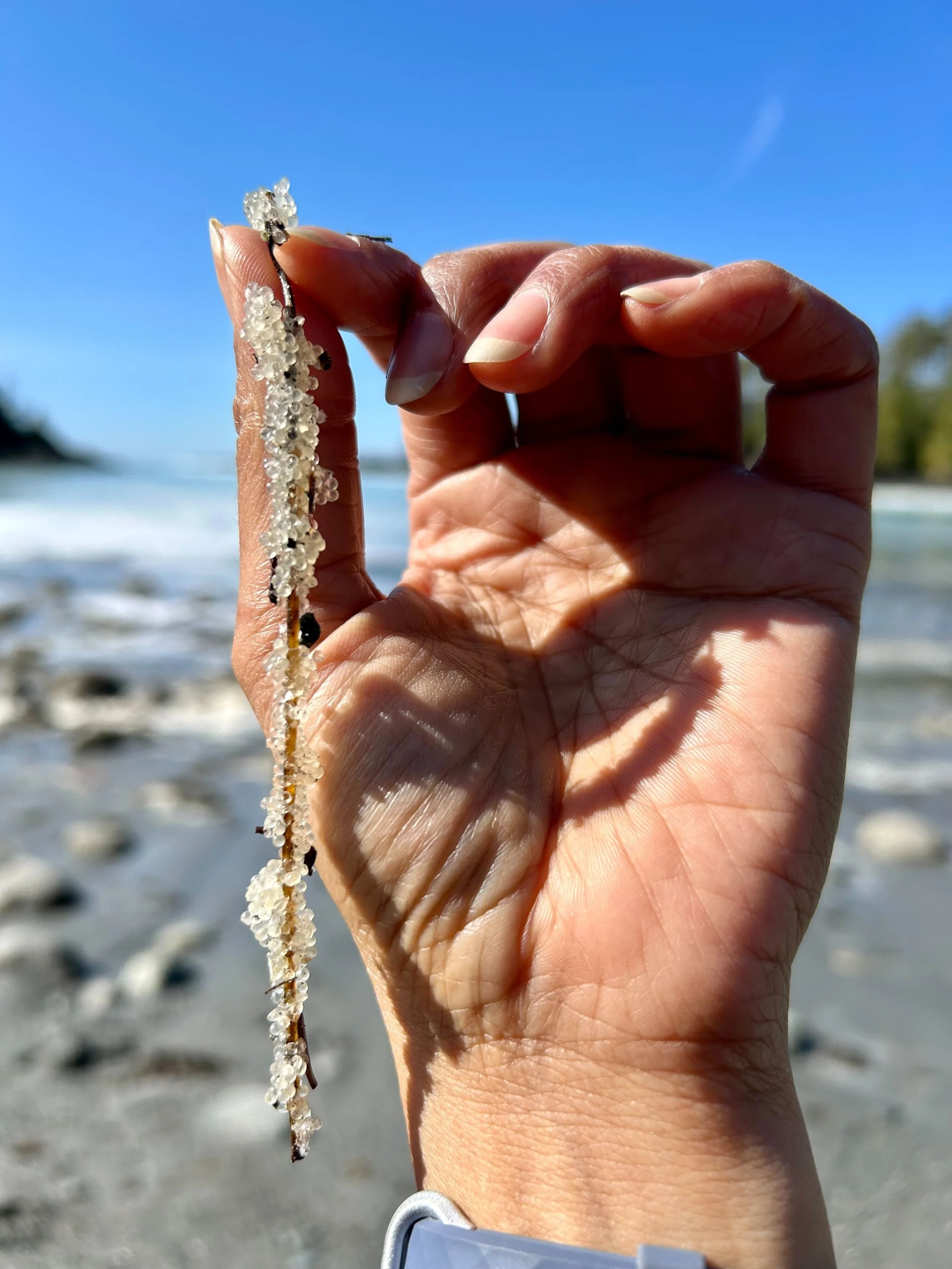
The soft, flat needles of ḵwáýtsay are a welcome site for spawning herring, providing shade, shelter and more surface area along the shoreline for eggs to adhere. This offering helps promote robust herring populations year after year and facilitates the creation of a delicacy Coast Salish peoples have enjoyed for centuries.
A Nutrient-Rich Coastal Delicacy
Herring roe is an exceptionally rich source of Omega-3 fatty acids that support brain and heart health. This combination of herring roe coated ḵwáýtsay needles which are rich in vitamin C and citrus flavour along with the subtle pop and crunch makes for a delightfully nutritious sensory experience - a welcome treat after a season of eating mostly cured foods.
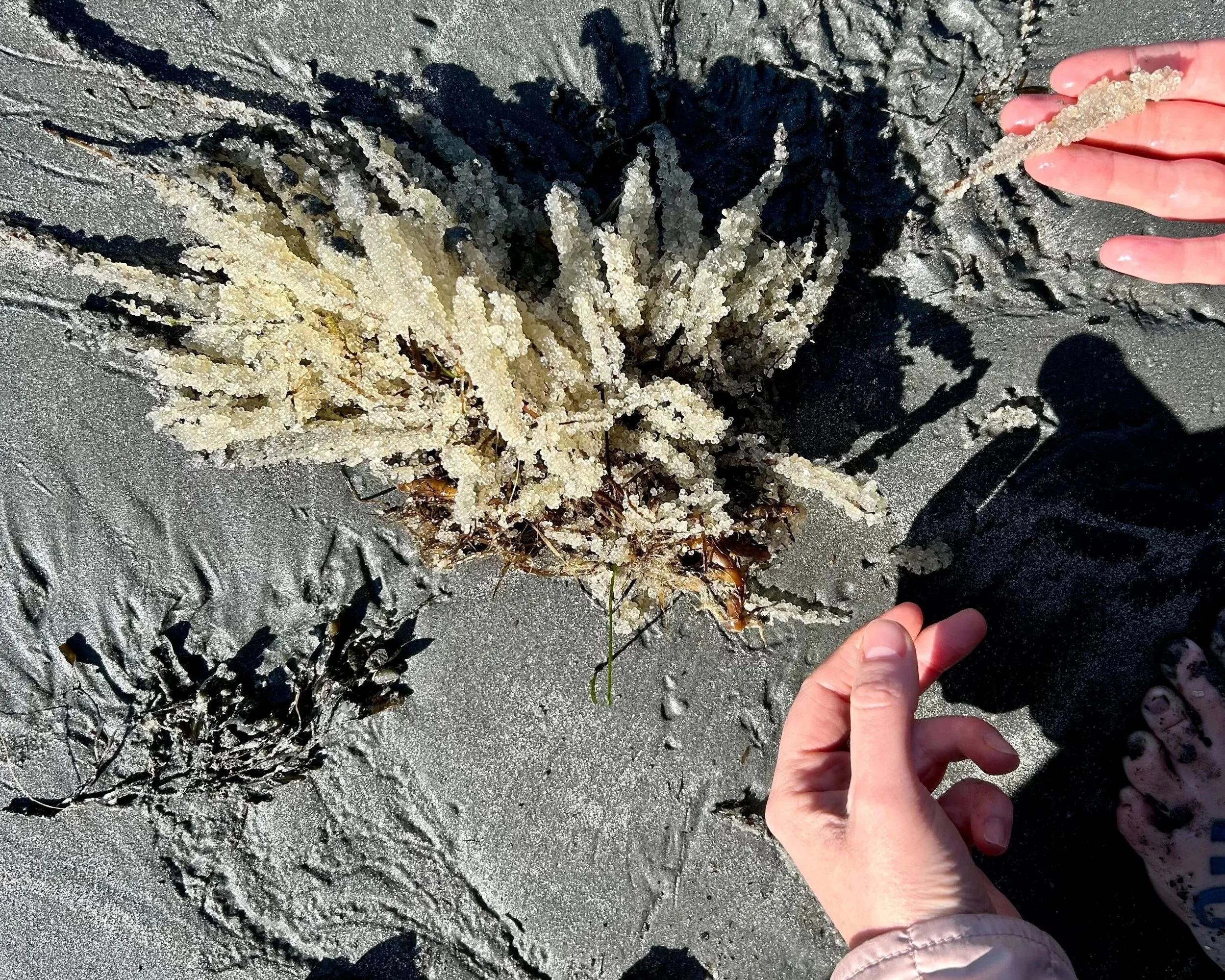
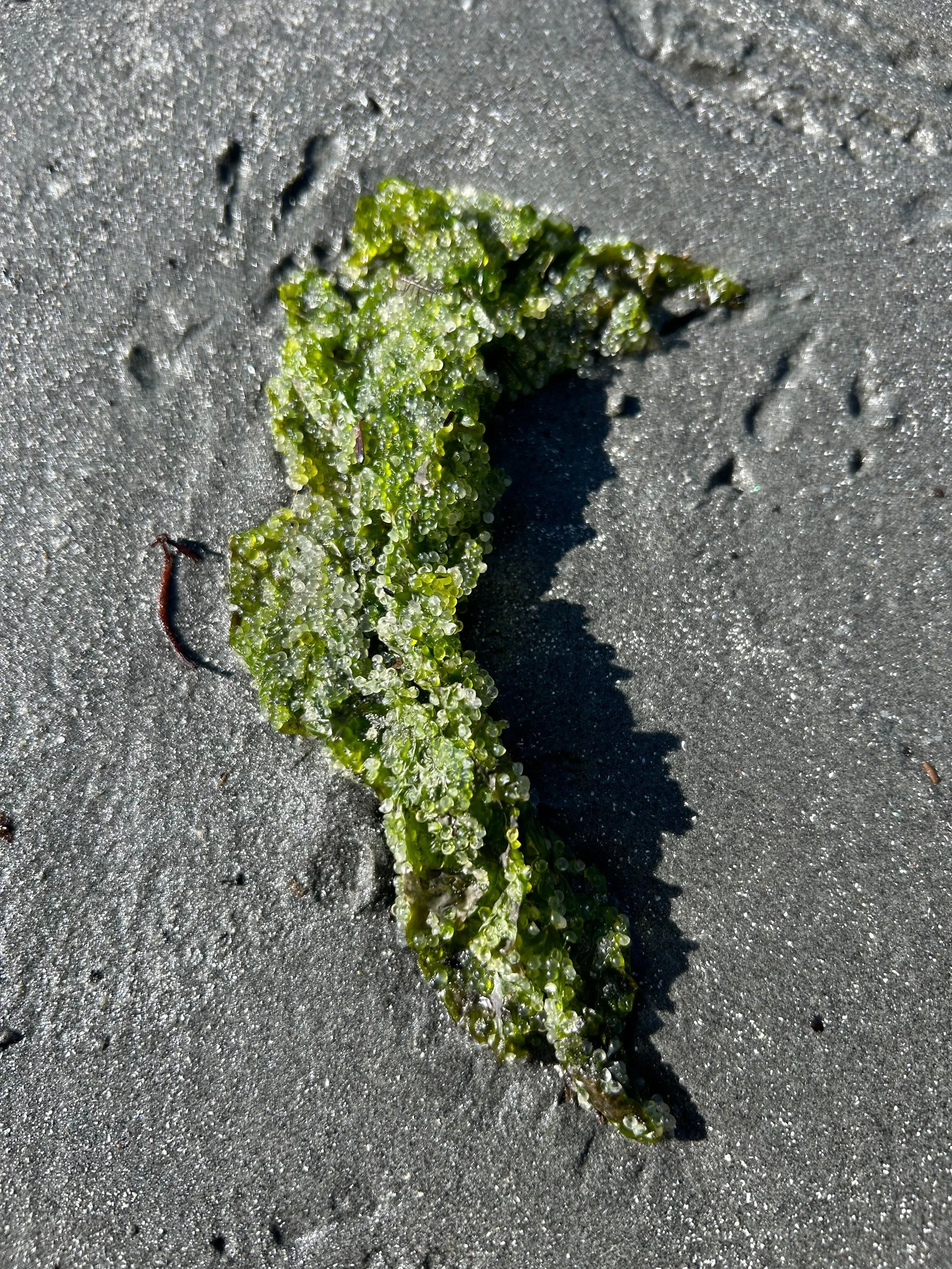
Roe-Coated Seaweed
Strands of roe-coated seaweed washed onto the sand.
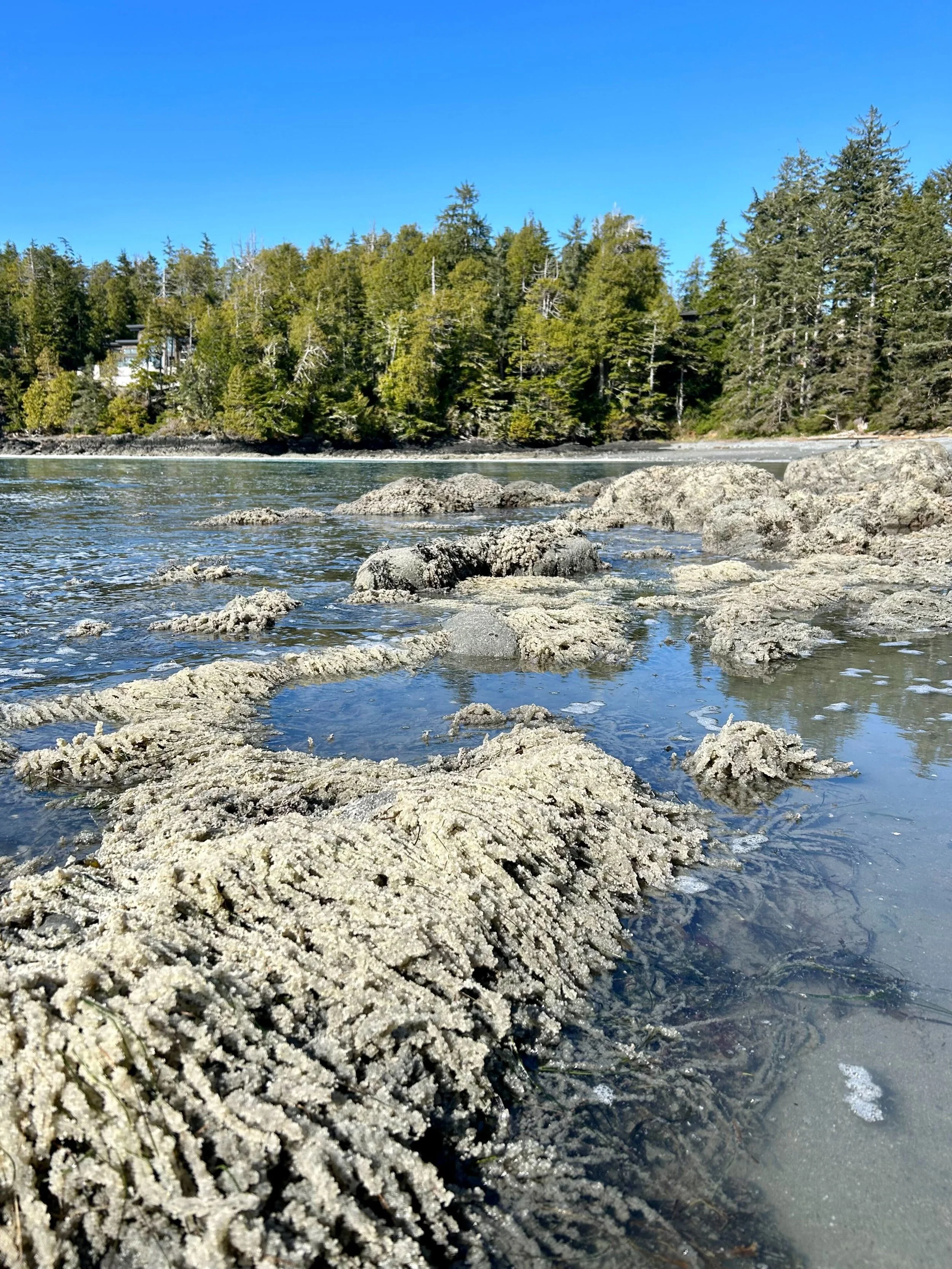
How Herring Sustain the Whole Ecosystem
This very modest offering supports more than just the Pacific herring themselves. It bolsters the abundance of the entire ecosystem. In a similar way that salmon feed our forests, so too do Pacific herring, cycling vital nitrogen from the sea to land. Emergent herring also become one of the first available food sources for many species of salmon smolt as they begin their transition from freshwater to a marine environment. Beneficial effects can be seen from soil microbes to apex predators of our coastal western hemlock zone.
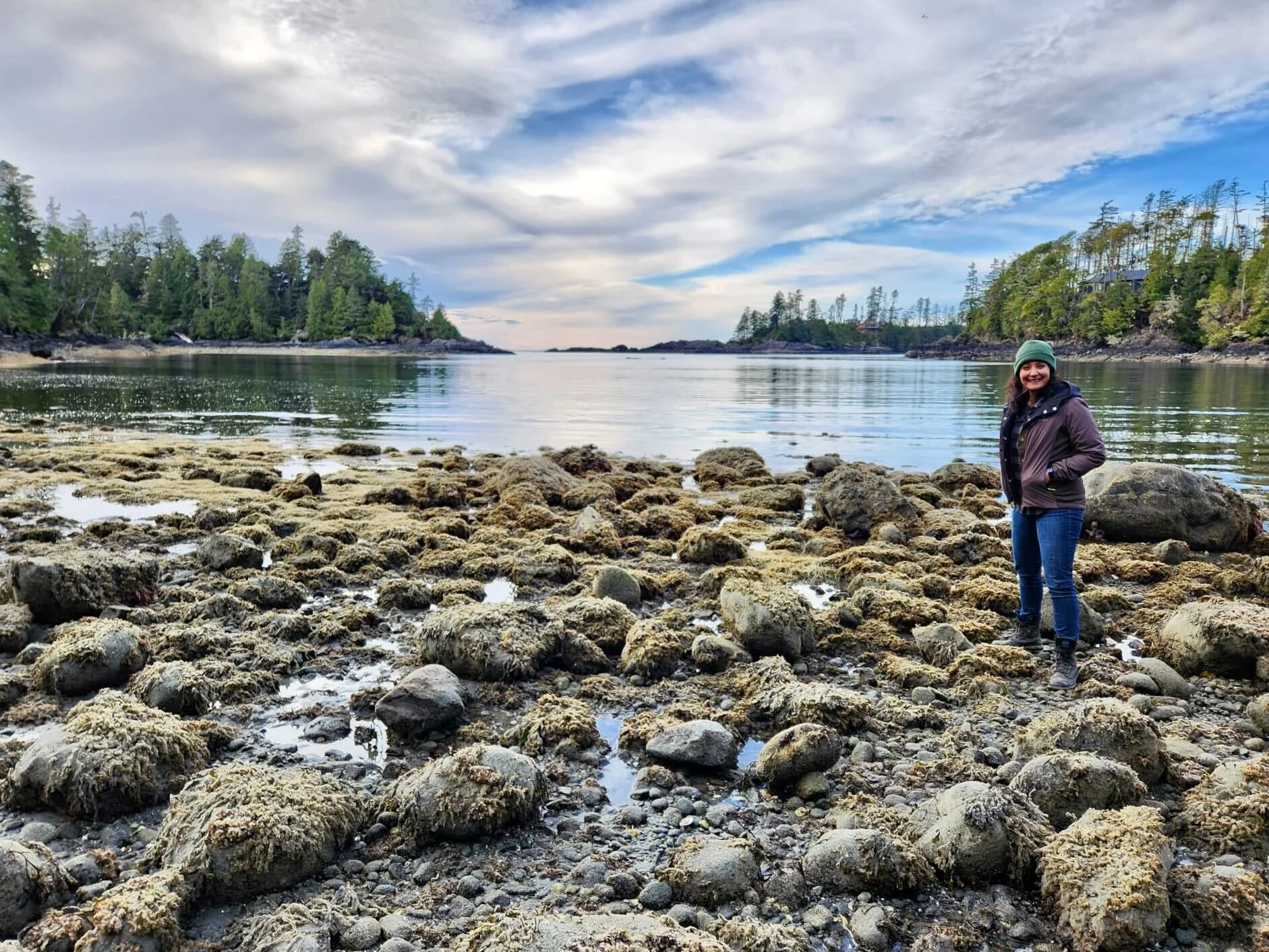
Among the Shoreline
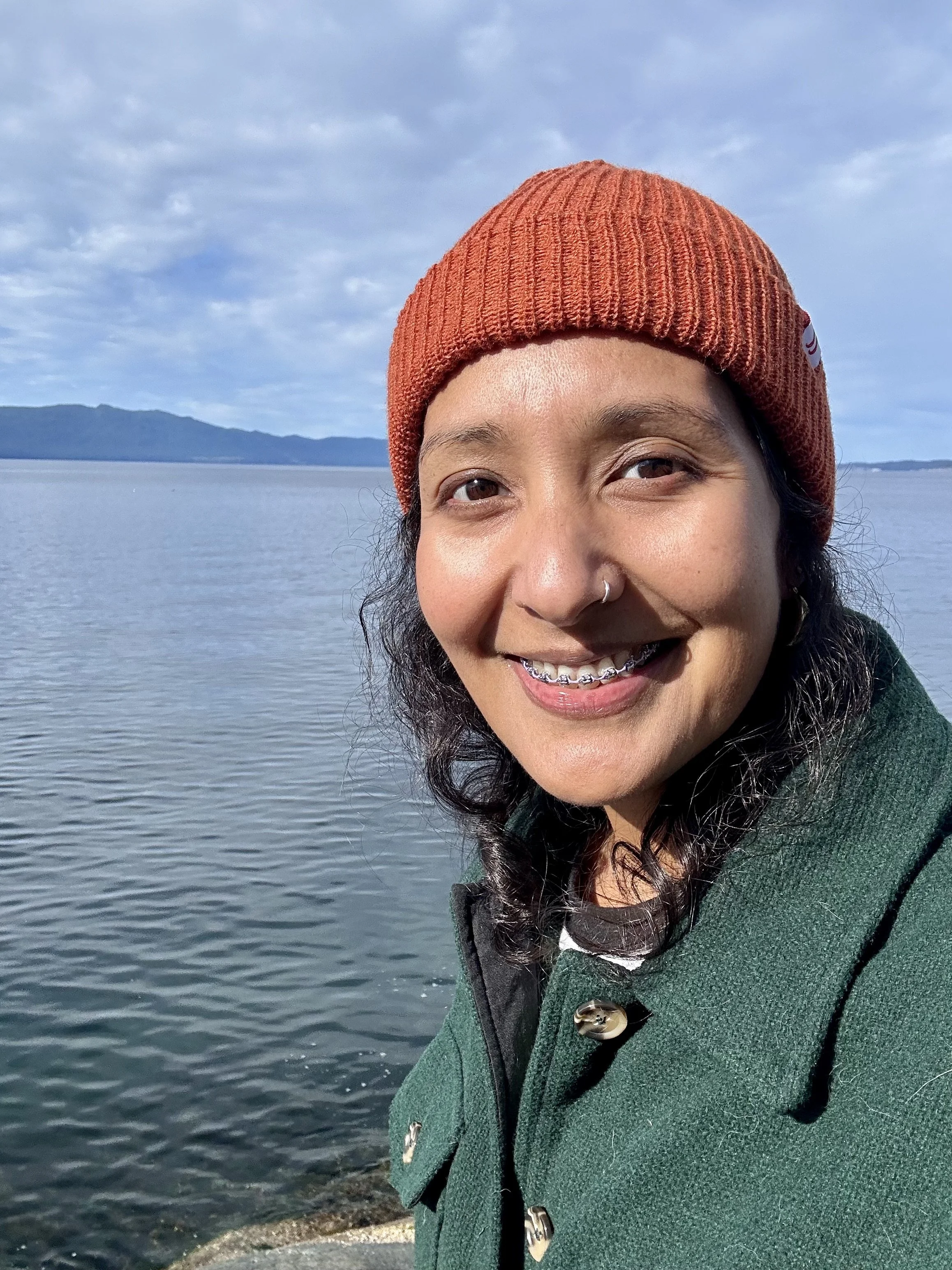
Ruby Banwait among the shoreline rocks during peak herring spawn.
Colonial Disruption and the Potlatch Ban
This successful and simple method of large scale resource management could have been lost to time with the implementation of the Potlatch Ban which criminalised the central governing, economic, and cultural ceremony of our Indigenous peoples from 1885 to 1951. The devastating combination of the Potlatch Ban and the introduction of commercial fisheries with no acts of reciprocity in their business plans has resulted in dwindling attendance of both hosts and guests in recent years of the herring “potlatch.”
Reviving Ancestral Wisdom for Climate Resilience
This ancestral wisdom of laying ḵwáýtsay along our shores provides us with an effective framework to shift from extractive, colonial systems to those rooted in reciprocity, creating a more balanced relationship with nature. This critical shift will allow us to be more climate resilient - a step which would greatly contribute towards reconciliation.
Returning Ceremony to the Shoreline
I am tremendously grateful for the resilience of our Indigenous peoples for countless reasons, including the reintroduction of ceremony to support our ecosystem with ḵwáýtsay. This ceremony has lived in my imagination for many years and one day I hope to participate.
Further Learning
Click here to read more about Tem lhawt’.
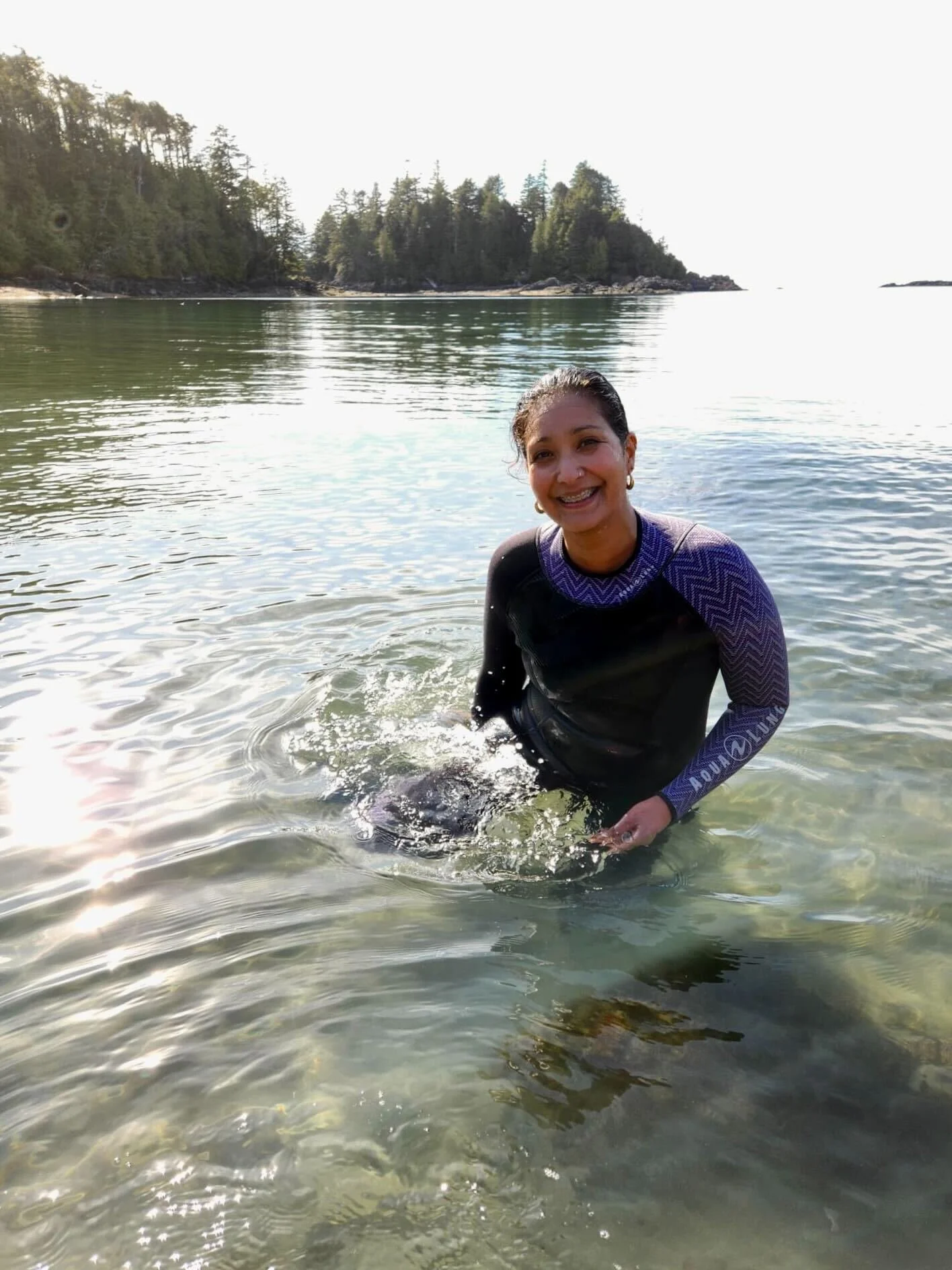
About the Author
Ruby Banwait works as a Cultural & Land Ambassador with Talaysay Tours. She is deeply passionate about restoring abundance to our ocean and encouraging everyone to create enduring relationships with nature. Join Ruby for a kayak trip or Salish Sea & Me tour in Vancouver or on the Sunshine Coast!
Image Location: Yuułuʔiłʔatḥ territory, BC
Image Credits: Courtesy of Ruby Banwait