In Relation: Bird and Plant Relatives
A quiet invitation to notice the relationships between birds, plants, and the places they call home.
A Birds’ Eye View
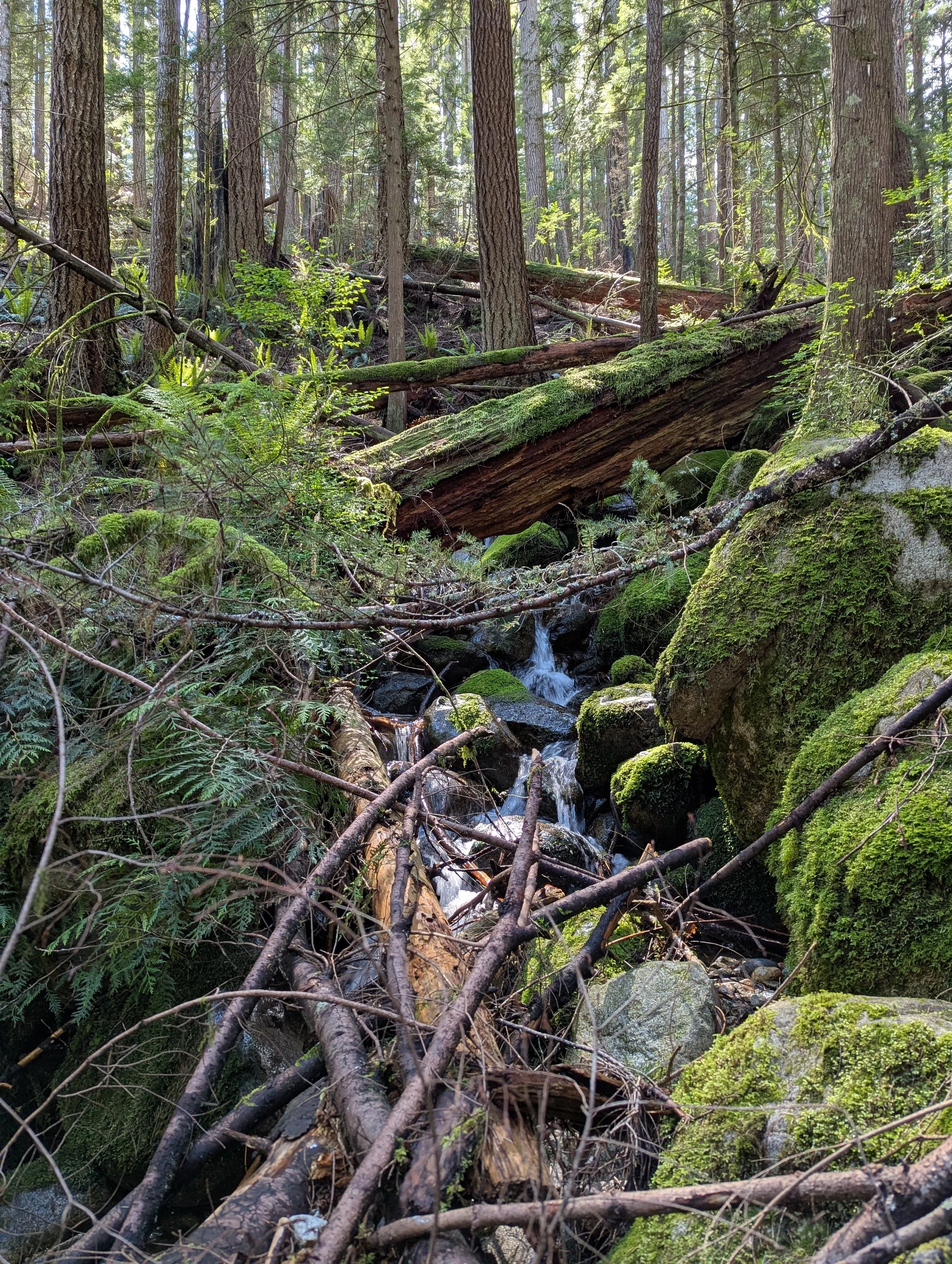
I invite you to shed your human skin and imagine the feeling of feathers. What do you see, hear, experience as a bird? Last spring, a friend and I sat quietly by this stream watching a Pacific Wren bring countless meals to their hungry babies. For a short time, we shared the wren’s awareness of the forest: our favourite perch, the alarm when a raven flew over, the nimbleness of flying between the branches, and the joy in singing and listening for our neighbours’ reply.
The Drumming of Woodpeckers
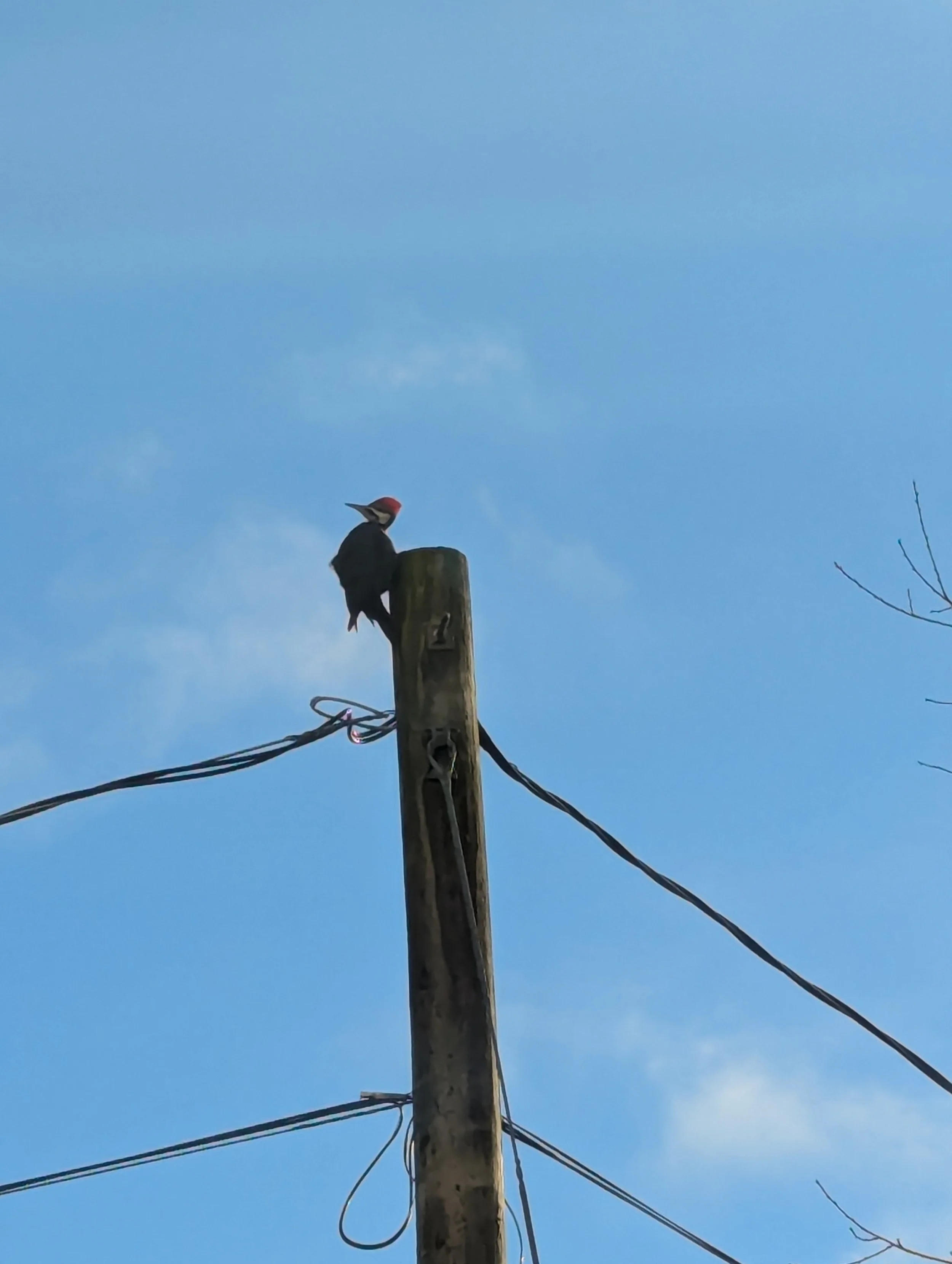
Many woodpeckers drum. Drumming is a way that woodpeckers attract mates and defend breeding territories. They search and find the trees with the best resonance. Sometimes the best resonance is a dryer vent! I imagine the woodpeckers searching for the right timbre, listening for the forest’s acoustics, just as human musicians do.
Welcoming Back our Bird Relatives
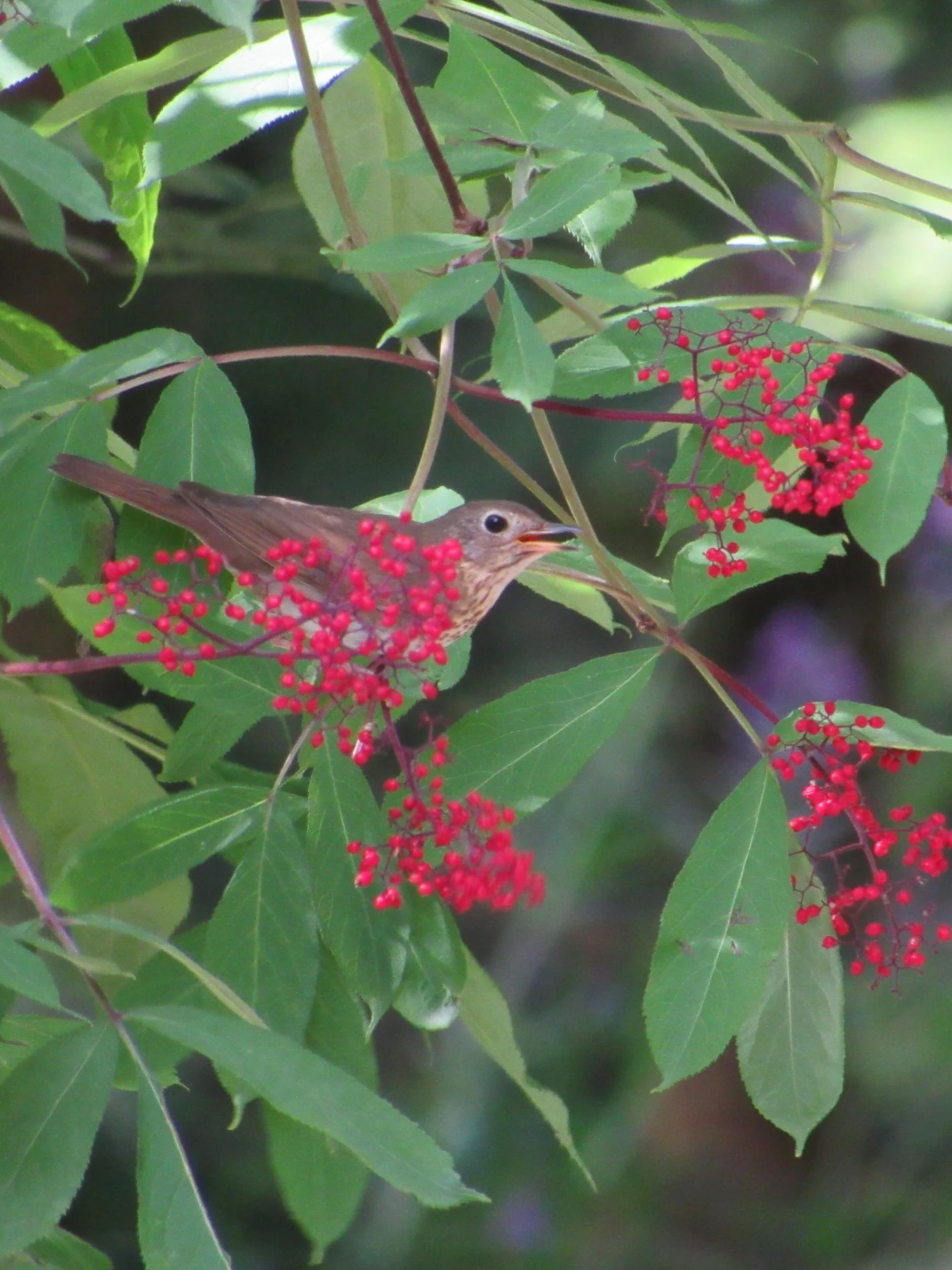
Here in Coast Salish Territories, we have many birds that are residents — they live here year-round — and we also have many birds that migrate here each summer to raise their families. Over the last few days, the Salmonberry birds (Swainson’s Thrush) are returning just as the salmonberries are starting to ripen. Listen for their ethereal song in the early morning or evening. Read Jayden’s article to hear more about stories of the Salmonberry bird. This is a very exciting time of year!
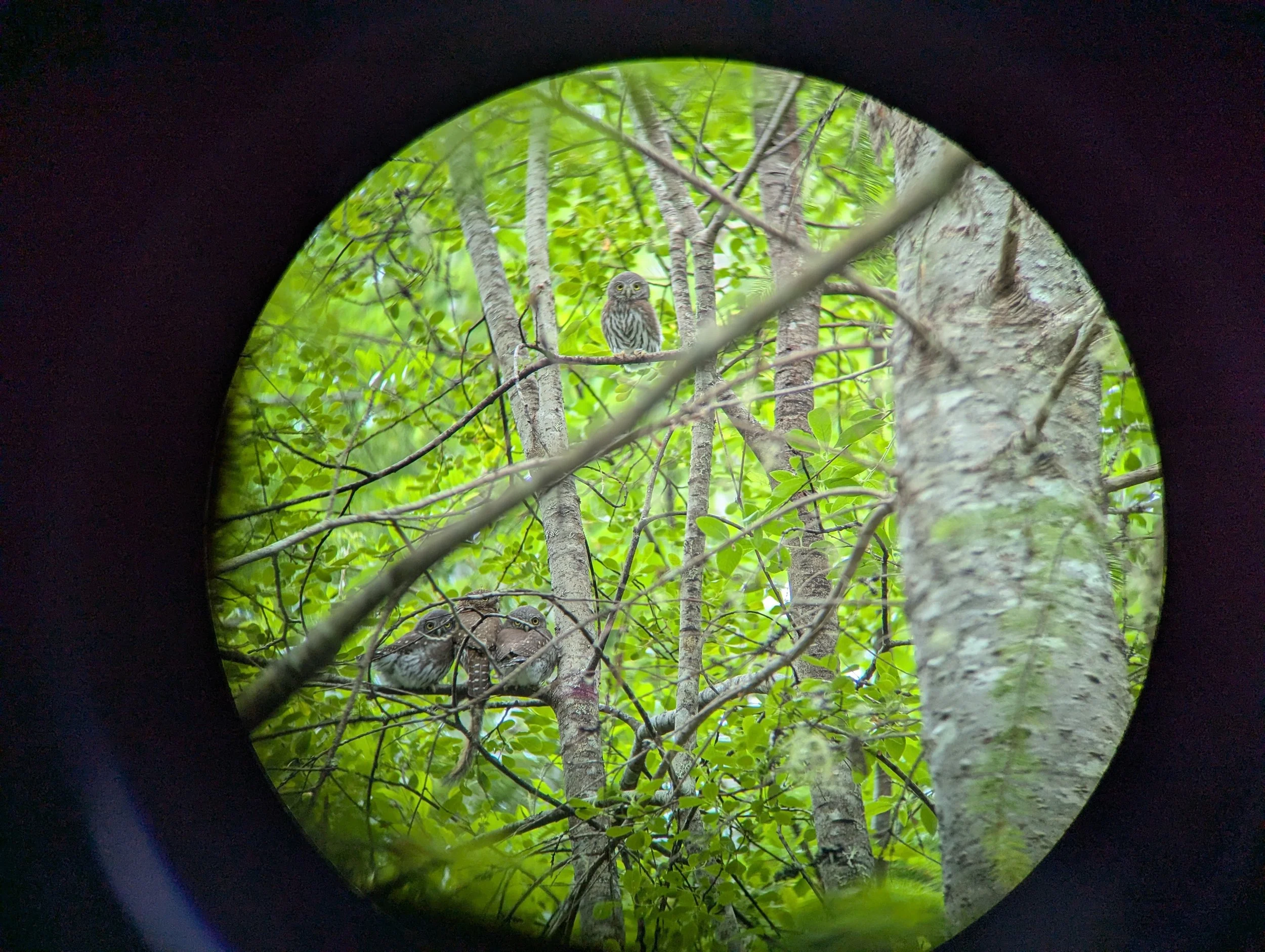
Wildlife, Waterfront Condos
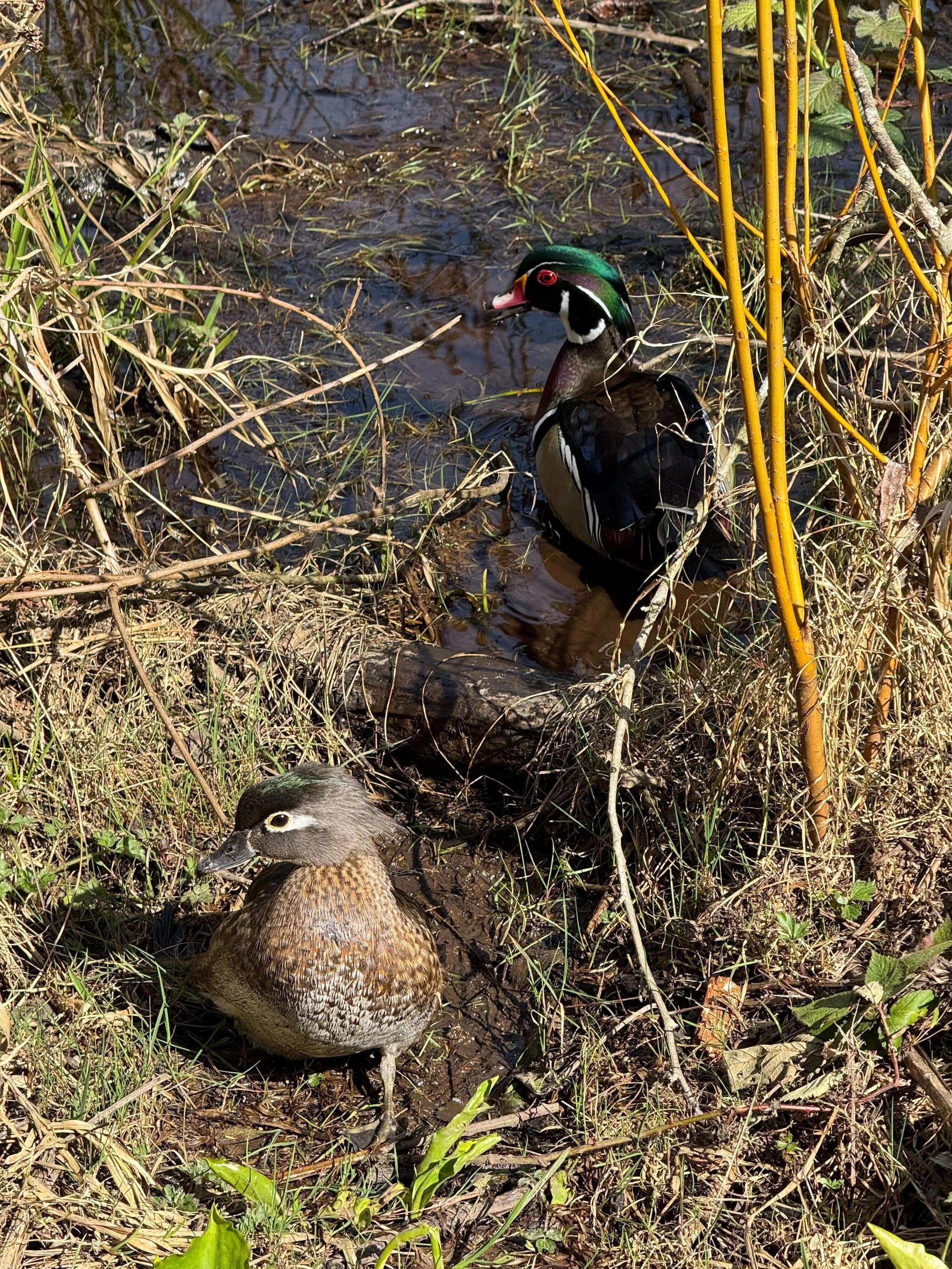
What do ducks and woodpeckers have in common?
Many people may think they are very different, but many ducks and woodpeckers are deeply connected.
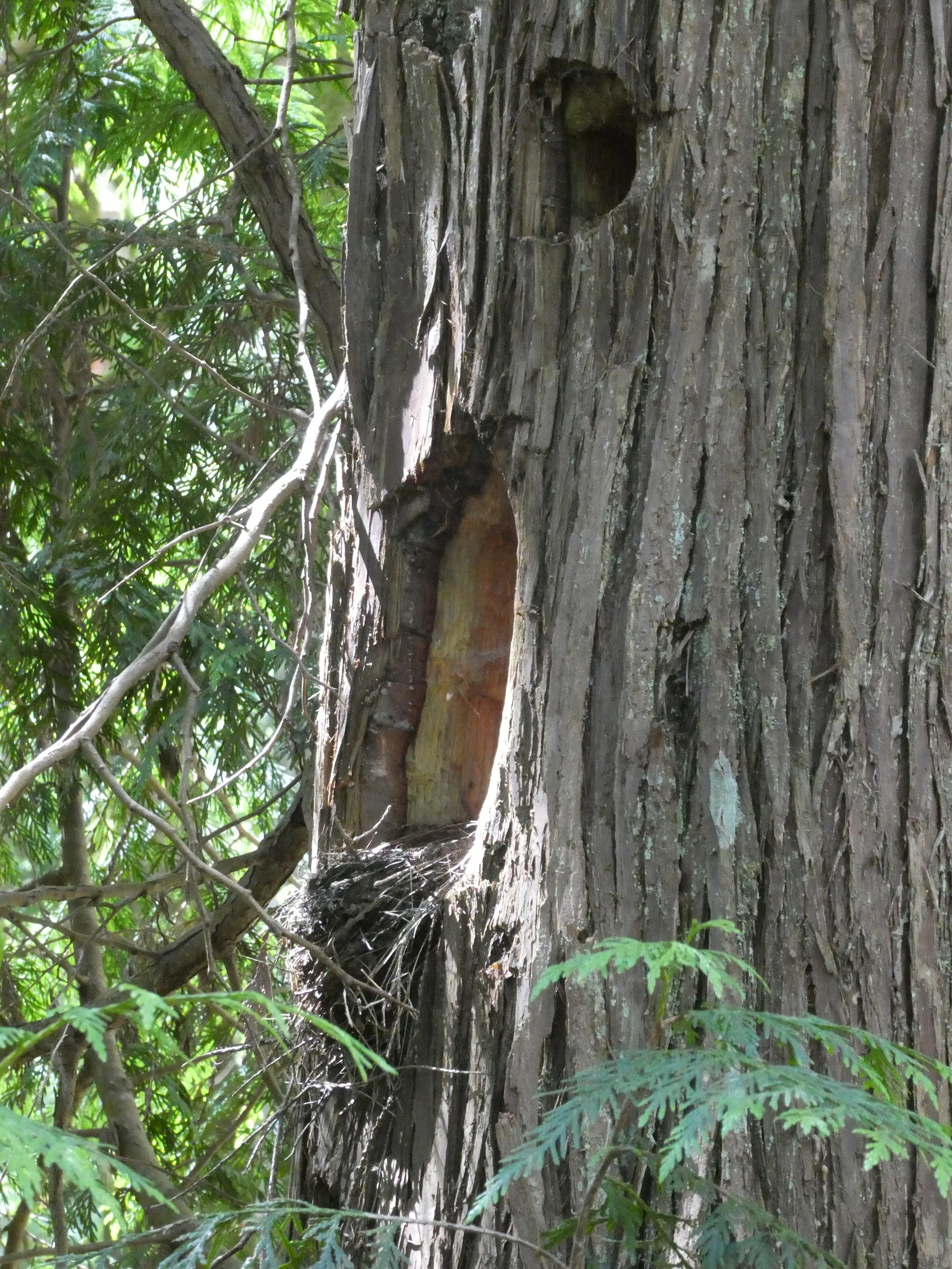
Woodpeckers create holes in snags such as kwelúl̓ay [kwuh-low-lie], alder in Skwxú7mesh.
Each woodpecker species makes a different size and shape hole. After the woodpeckers move out, the holes they have made become the homes of many other animals including owls, Wood Ducks, and Hooded Mergansers.
Generosity of the Mat Rush
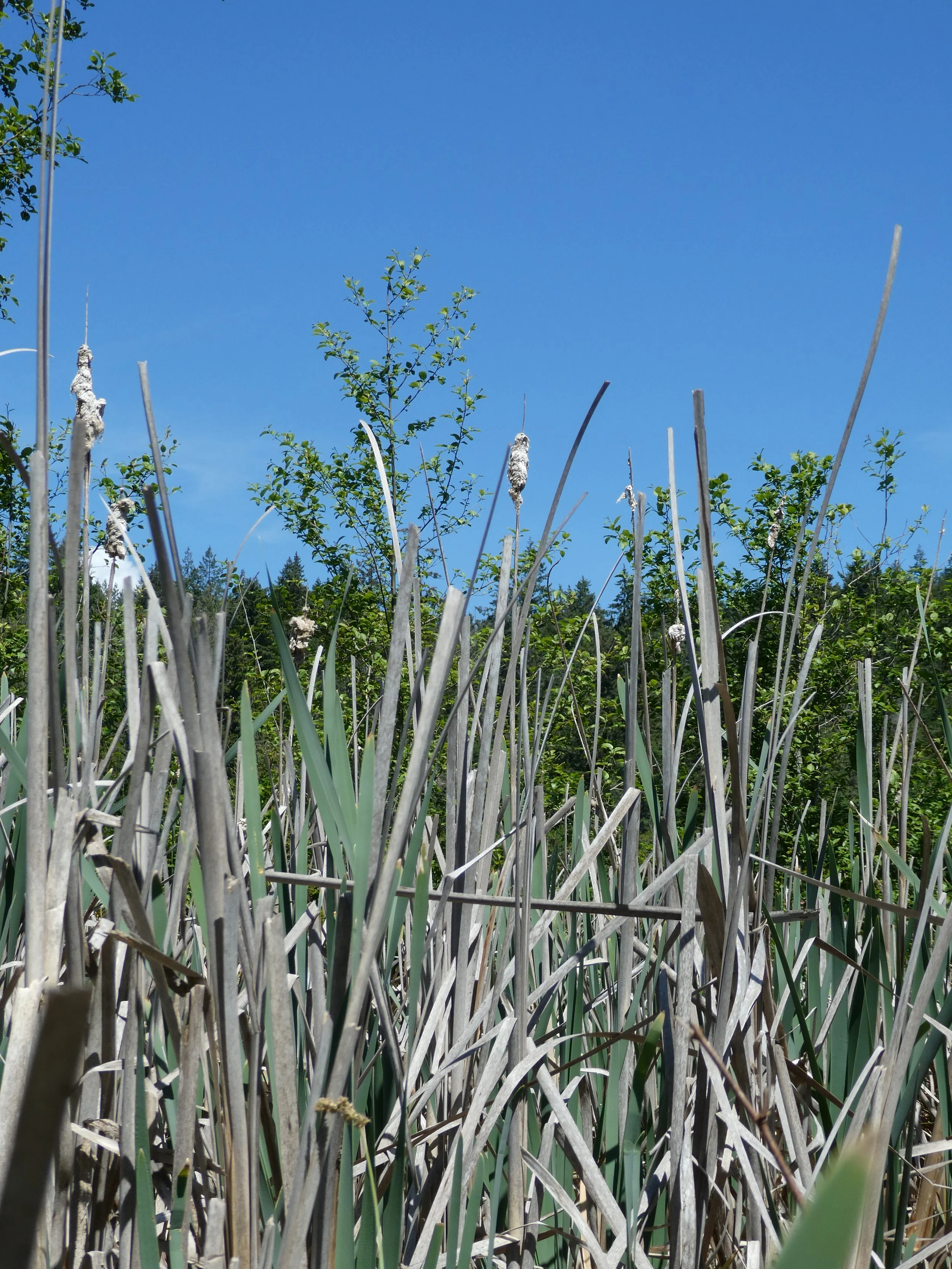
sts’á7ḵin [stuh-aw-kane] meaning mat rush in Skwxú7mesh sníchim, are very important plant relations within wetland environments to both human and feathered relatives.
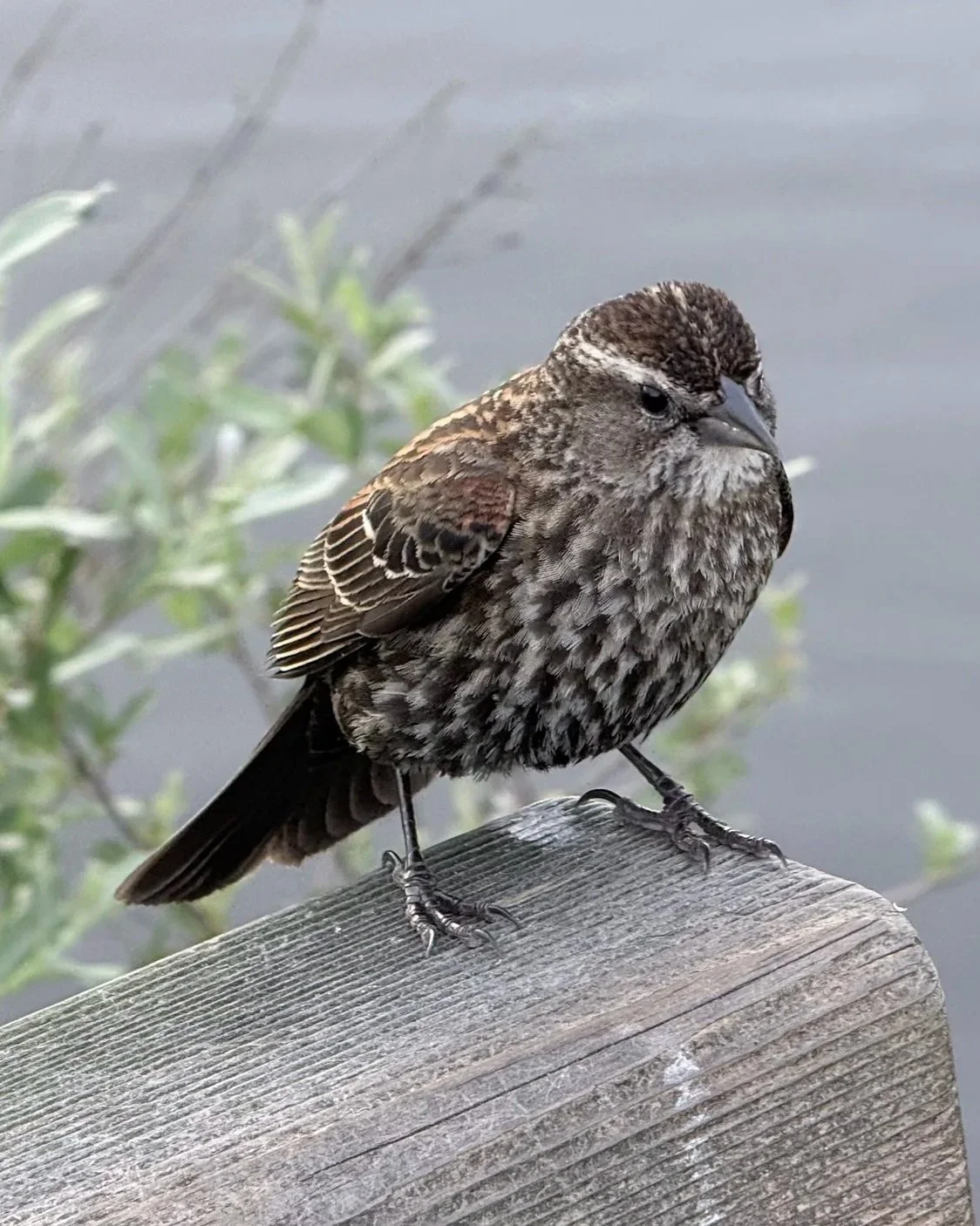
In early spring, Rufous Hummingbirds arrive back, right in time with the salmonberries blooming.
Soon after they return, the females begin to build a tiny nest, often lined with the soft fluff from the generous sts’á7ḵin. In late spring, the marsh comes alive with Red-winged Blackbirds building their nests between the mat rush stalks by weaving together the long leaves.
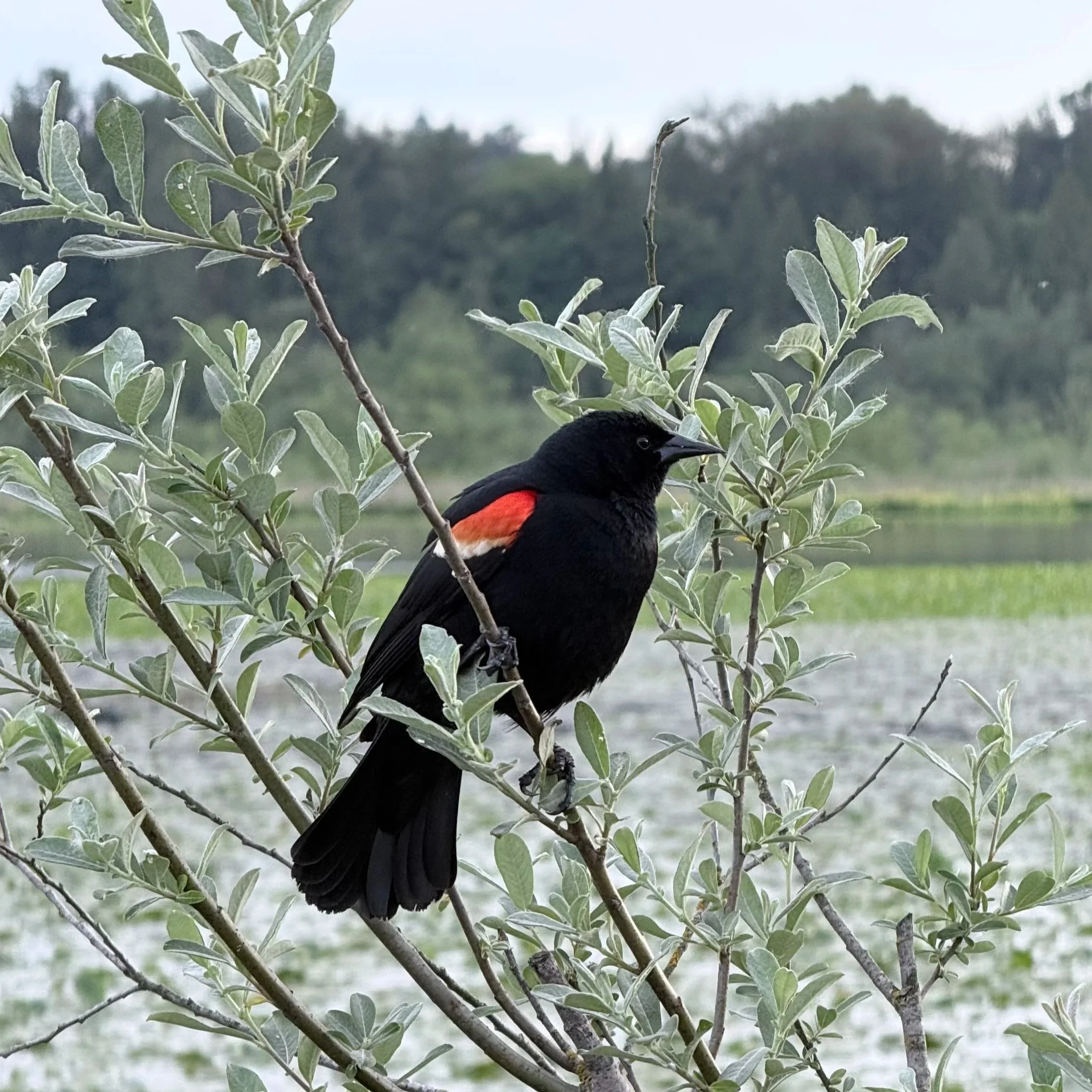
Nearby, the male Red-winged Blackbird carries the distinct red wing patches of the same relation.
Together, they remind us that recognition often begins with looking twice.
About the Author
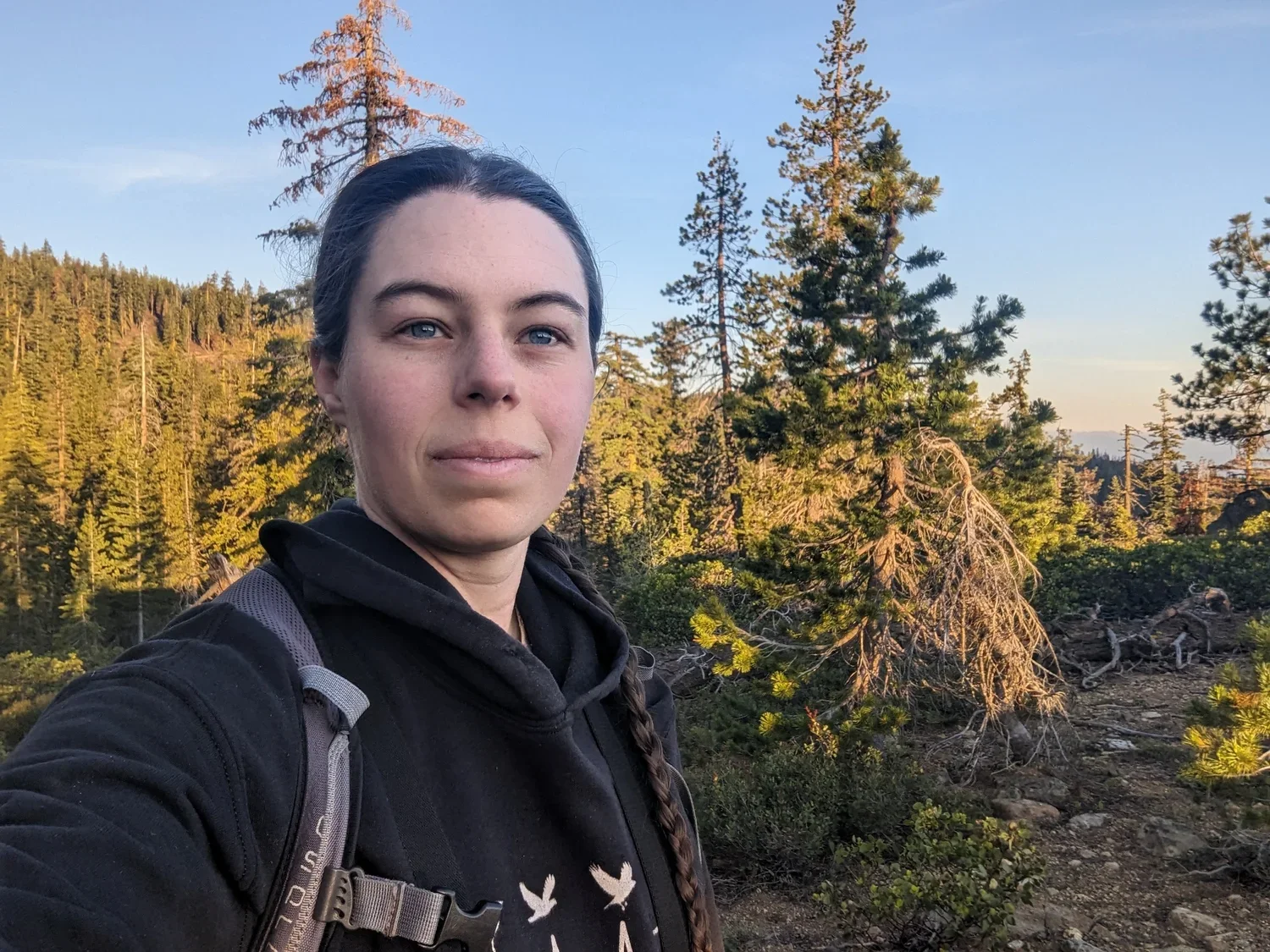
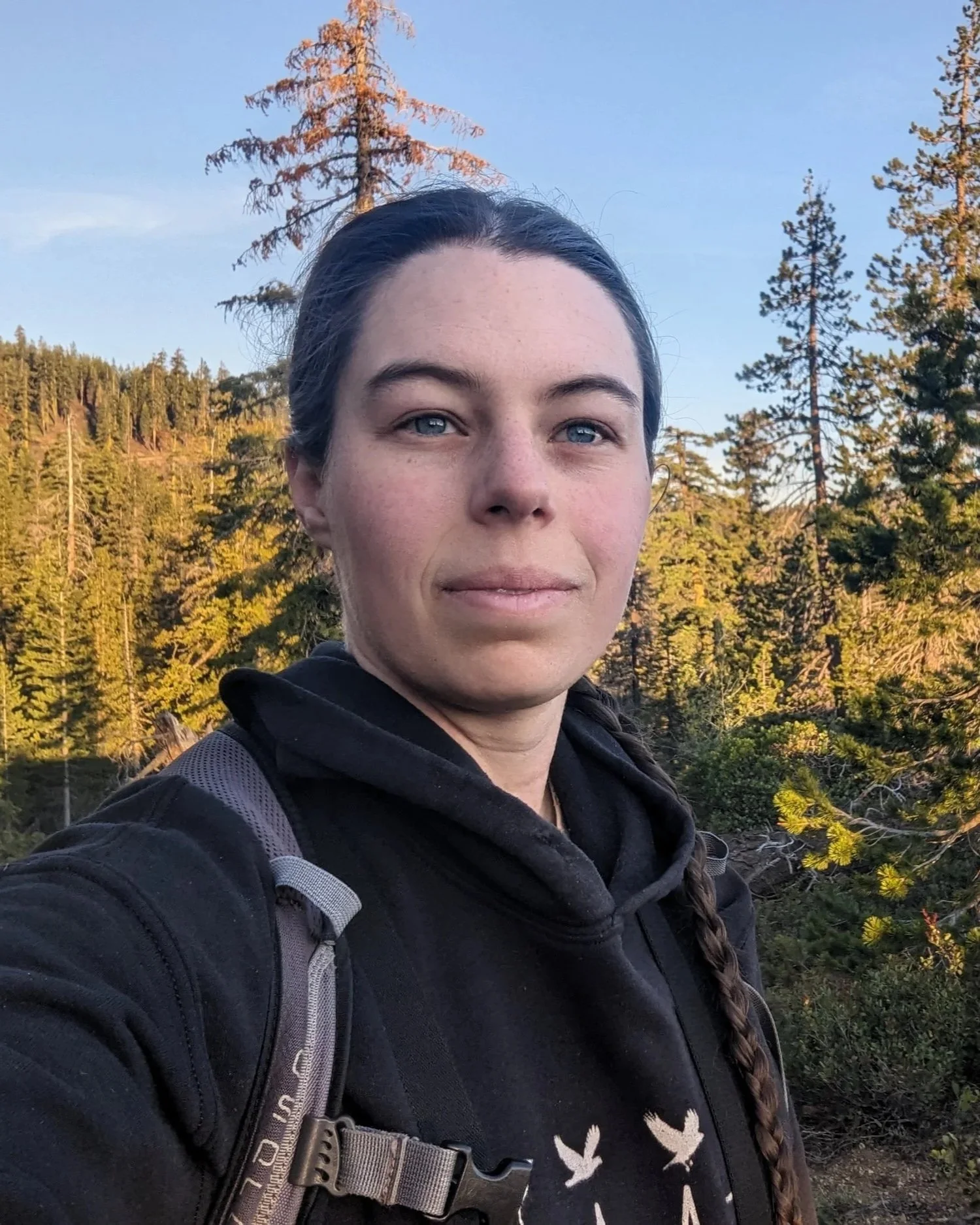
Fianna Wilde is an immigrant settler of mostly Celtic and English ancestry. She grew up in the beautiful Pacific Northwest nurtured by lots of time outdoors. With a background in ornithology, theatre, and Indigenous studies, Fianna is passionate about anti-colonial science and storytelling as ways to help people connect to the vibrant world we all share. She enjoys sharing her love of birds and inspiring others to appreciate our feathered relatives. If she could be any bird, she would be a Pacific Wren.
Image Credits:
Bird’s eye view - Fianna Wilde, Sḵwx̱wú7mesh territory, BC
Pileated Woodpecker on pole - Fianna Wilde, Sḵwx̱wú7mesh territory, BC
Salmonberry Bird - Fianna Wilde, shíshálh swiya, BC
Northern Pygmy Owl - Fianna Wilde, shíshálh swiya, BC
Wood Ducks - Talaysay Campo, Stanley Park: xʷməθkʷəy̓əm, Sḵwx̱wú7mesh, and səlilwətaɬ territories, BC
Pileated Woodpecker home in tree - Fianna Wilde, shíshálh swiya, BC
sts’á7ḵin / Mat Rush - Fianna Wilde, shíshálh swiya, BC
Female Red-winged Blackbird - Liz V, Burnaby Lake: xʷməθkʷəy̓əm, Sḵwx̱wú7mesh, səlilwətaɬ, and kʷikʷəƛ̓əm territories, BC
Male Red-winged Blackbird - Liz V, Burnaby Lake: xʷməθkʷəy̓əm, Sḵwx̱wú7mesh, səlilwətaɬ, and kʷikʷəƛ̓əm territories, BC
Fianna Wilde - Author photo