Return to x̱enichen
Poem and opening reflection by Ruby Banwait
Journey reflection by Richard C. Till
Ruby Banwait and Richard C. Till offer companion reflections from a spring journey through lekw’emin to x̱enichen, carrying moments of kinship, shared learning, stillness, laughter and deep attention to place.
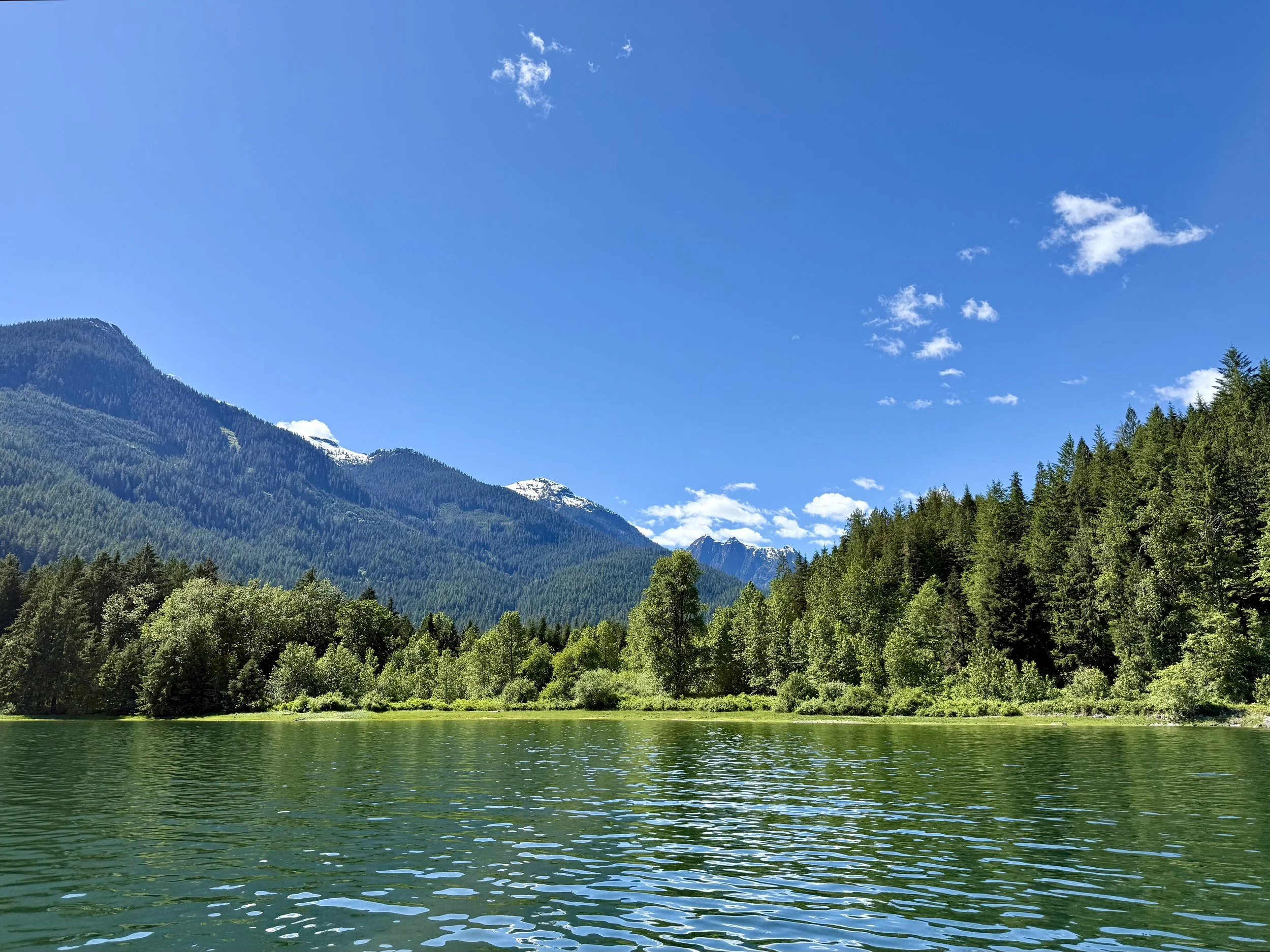
x̱enichen
Part One: Ruby Banwait
An Honour Like No Other
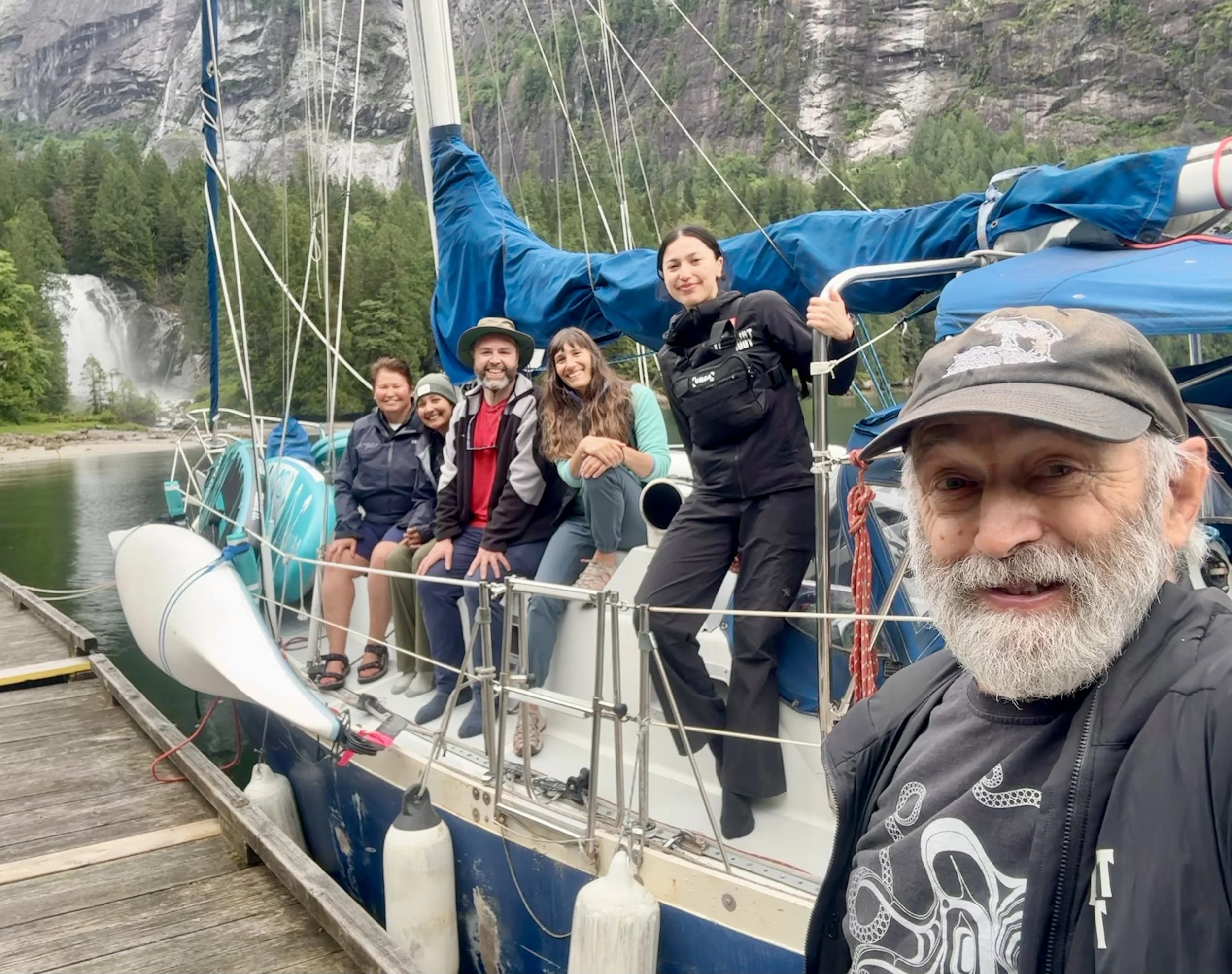
The Kudlik crew at Chatterbox Falls
Gratitude.
Somehow that word doesn’t seem to scratch the surface of the overwhelming emotion I experienced simply receiving the invitation to join Talaysay Tours owners, Candace and Talaysay Campo, on a homecoming, exploratory journey of connection at the end of May 2026.
A small group of us; friends, colleagues, kin, were fortunate enough to travel lekw’emin (Jervis Inlet) to visit ancestral village sites within the shíshálh swiya (territory). It was an unforgettably expansive and awe inspiring journey that I hope to hold in my heart and mind for all my days.
Inertia
A poem by Ruby Banwait
Deeply humbled
I accepted the invitation
to shed my virtual exoskeleton
on a journey of kinship
An opportunity
to witness
connect
experience
grow
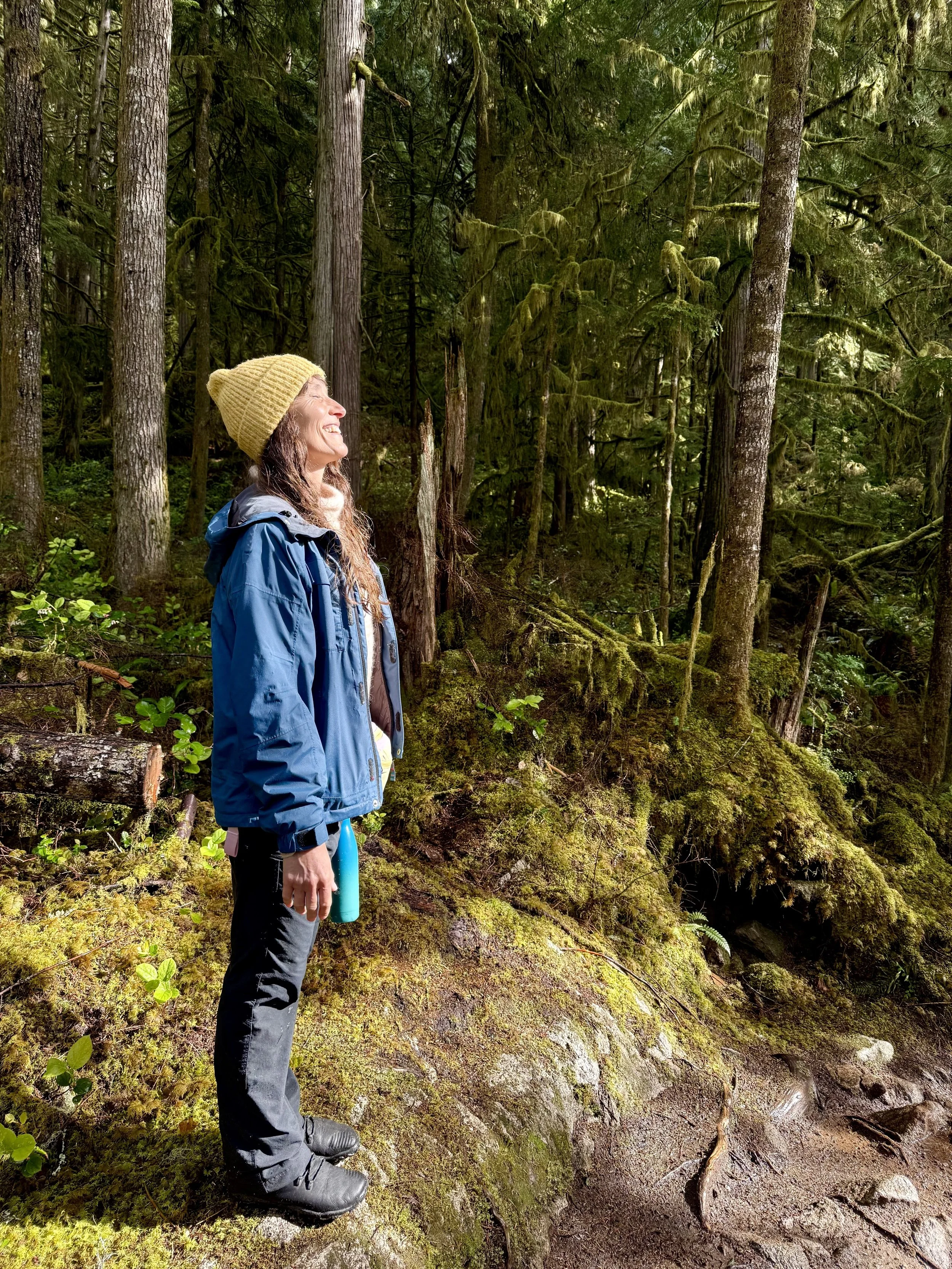
Katherine in the forest
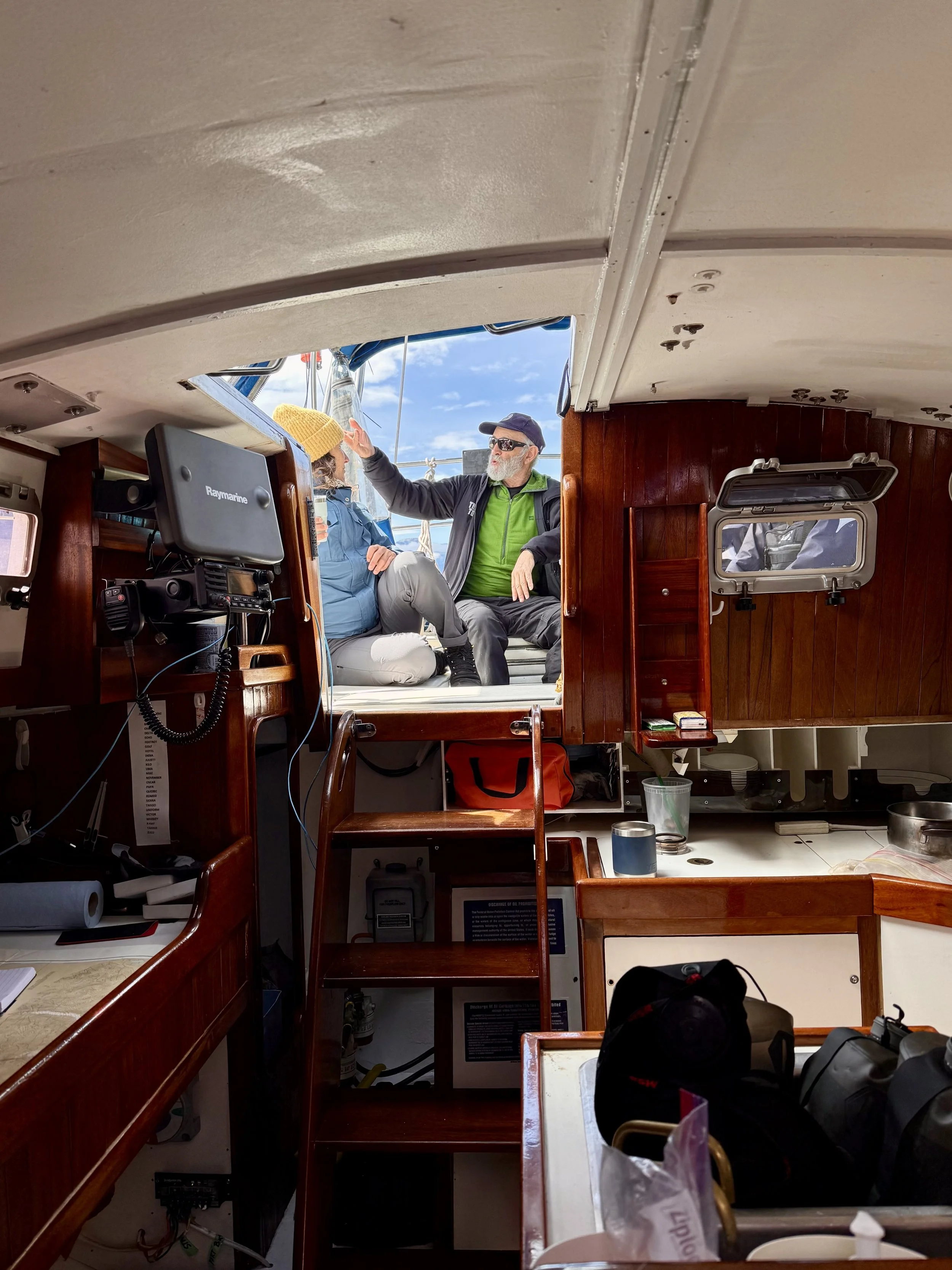
With kindred spirits
I transformed
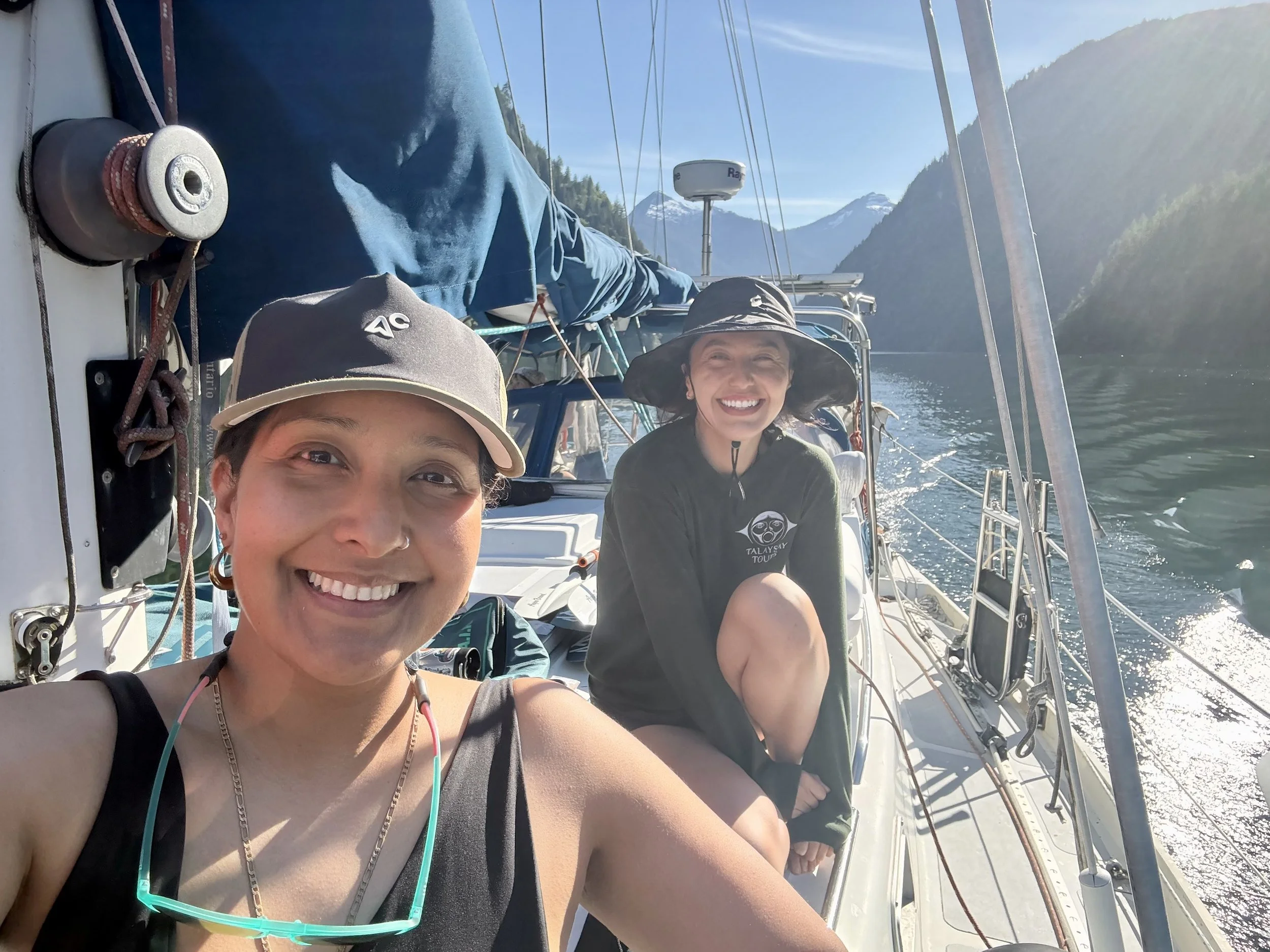
in quiet moments aboard Kudlik
Travelling lekw’emin
to ancestral lands
A journey into oneself
Richard sharing stories aboard Kudlik
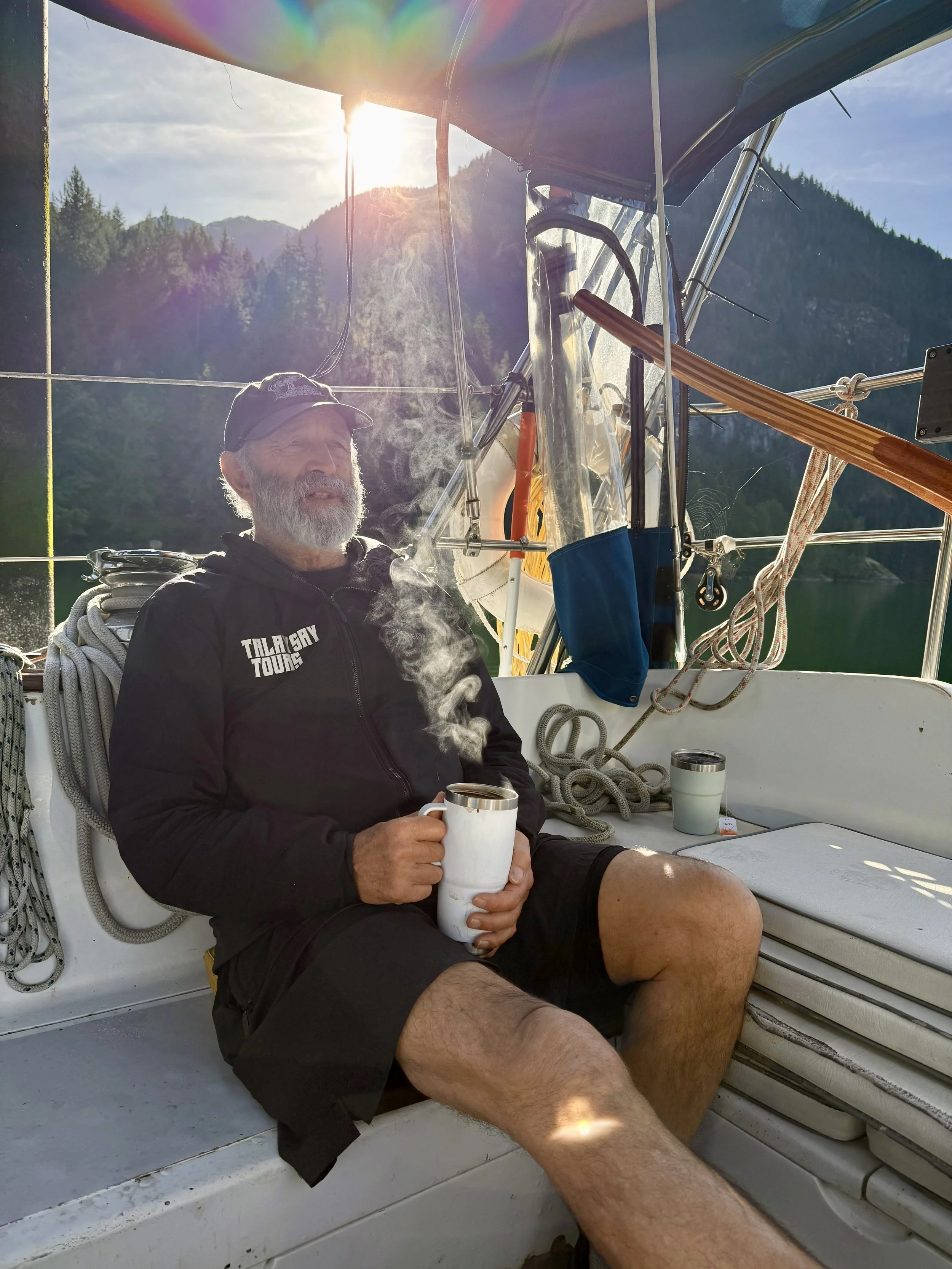
We shared joy
stories
challenges
laughter
hope
and tea
Richard with morning tea aboard Kudlik
To know one another
as kin of nature
carrying ancestral wisdom
through this life
Precious gifts from generations past Shared
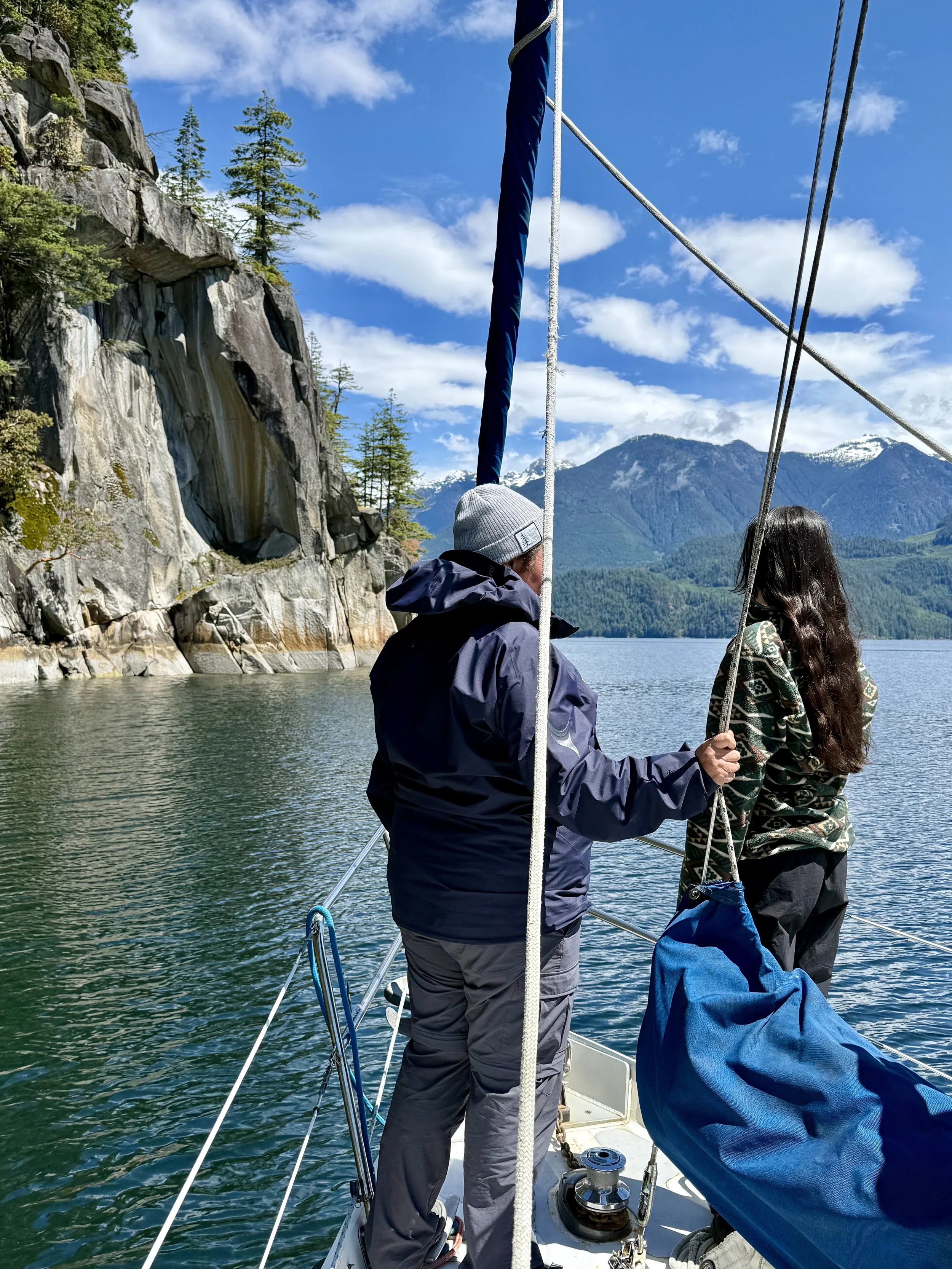
Candace and Talaysay aboard Kudlik
Captivated by x̱enichen
my spirit at peace
An abundance
of more than human relatives
Once thriving through centuries
now simply surviving
Persistent
Resilient
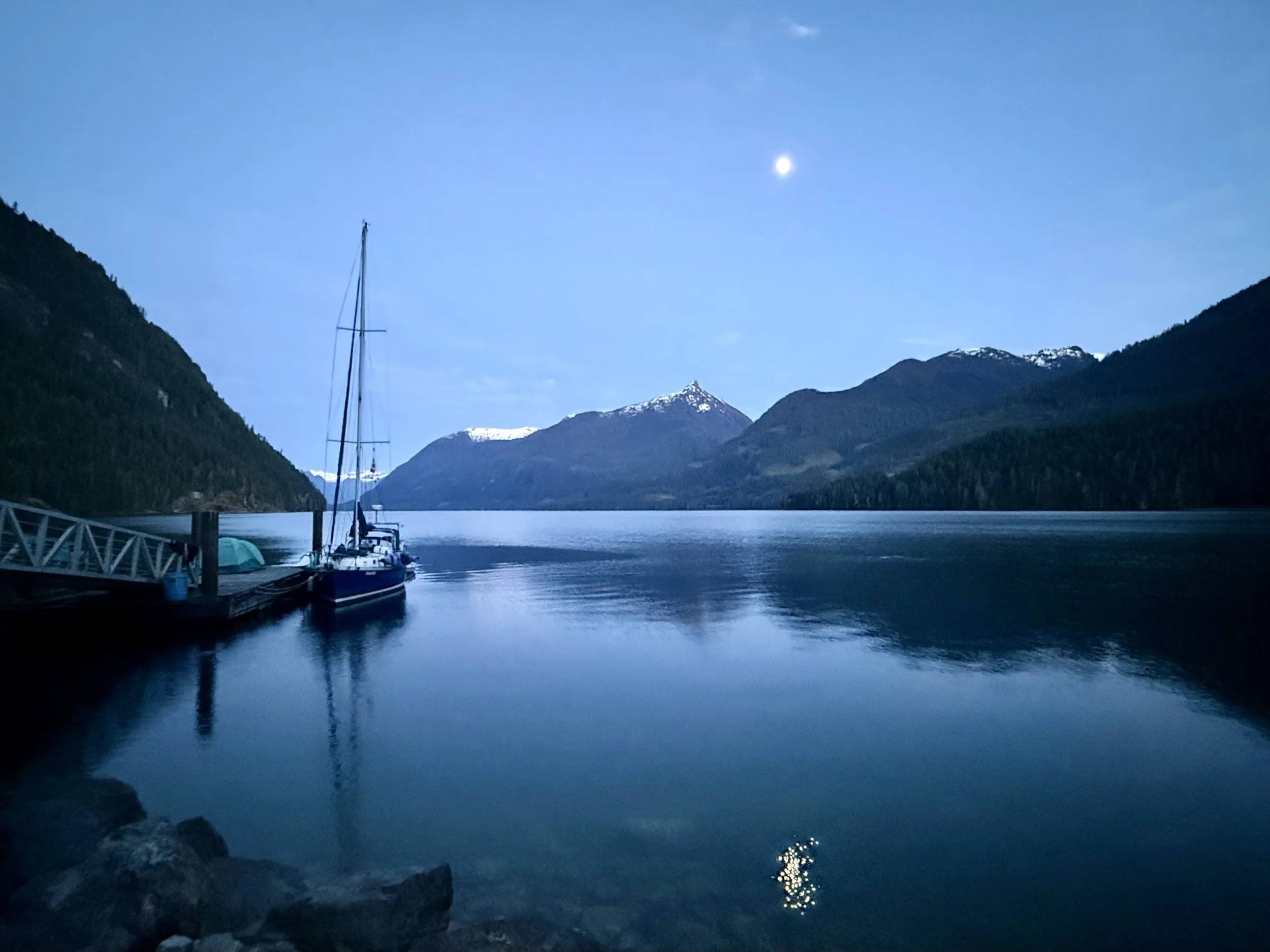
Moon over x̱enichen
We unite to fill gaps
between science and story
To feel strength and humility
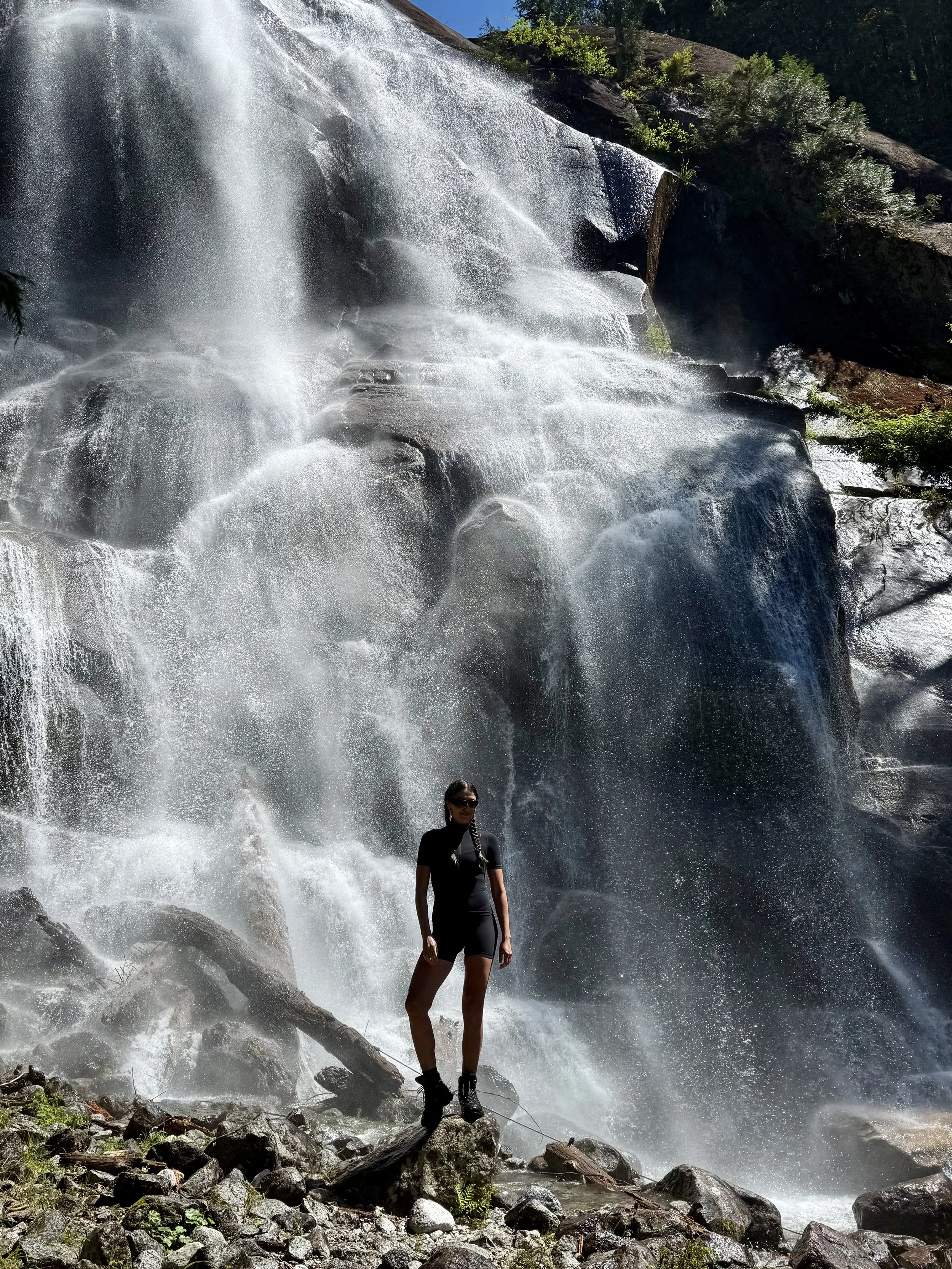
under the mist of waterfalls
Talaysay at the waterfall
On shores of ancestral sea gardens along forest trails
in sacred waters
we nurtured a shared desire
to inspire others
A journey of creation begins
Ruby and Talaysay aboard Kudlik
Part Two: Richard C. Till
What Has Always Been There
A reflection by Richard C. Till
A fortunate few among the Talaysay team set out on a spectacular and most memorable trip this spring. Each for our own personal reasons, and all working toward a unified purpose, members of our team committed to journey into the “Motherland” of the shíshálh people. Answering the call of the land, we set out to study local history and ethnoecology, revisit the home villages of Talaysay and Candace and embrace whatever new experiences we might encounter. A theme for the trip might best be summarised in a consistently held teaching from Robin Wall Kimmerer: we are not on a voyage of discovery but actively engaged in an act of paying attention to what has always been there.
Ch’ḵw’elhp
On the 23 rd of May we departed from our home port in the Ch'ḵw'elhp
(Gibsons Landing) areas of the Sḵwx̱wú7mesh (Squamish) peoples and set course for
x̱enichen at the head of lekw’emin (Jervis Inlet) in the lands and waters of the shíshálh
Nation.
The completed trip would cover some 165 nautical miles or well over 200 kilometers. The terrain would vary from tiny dry belt fir islands to 2500 metre glaciated peaks like sluh-uhtl (Mt Albert).
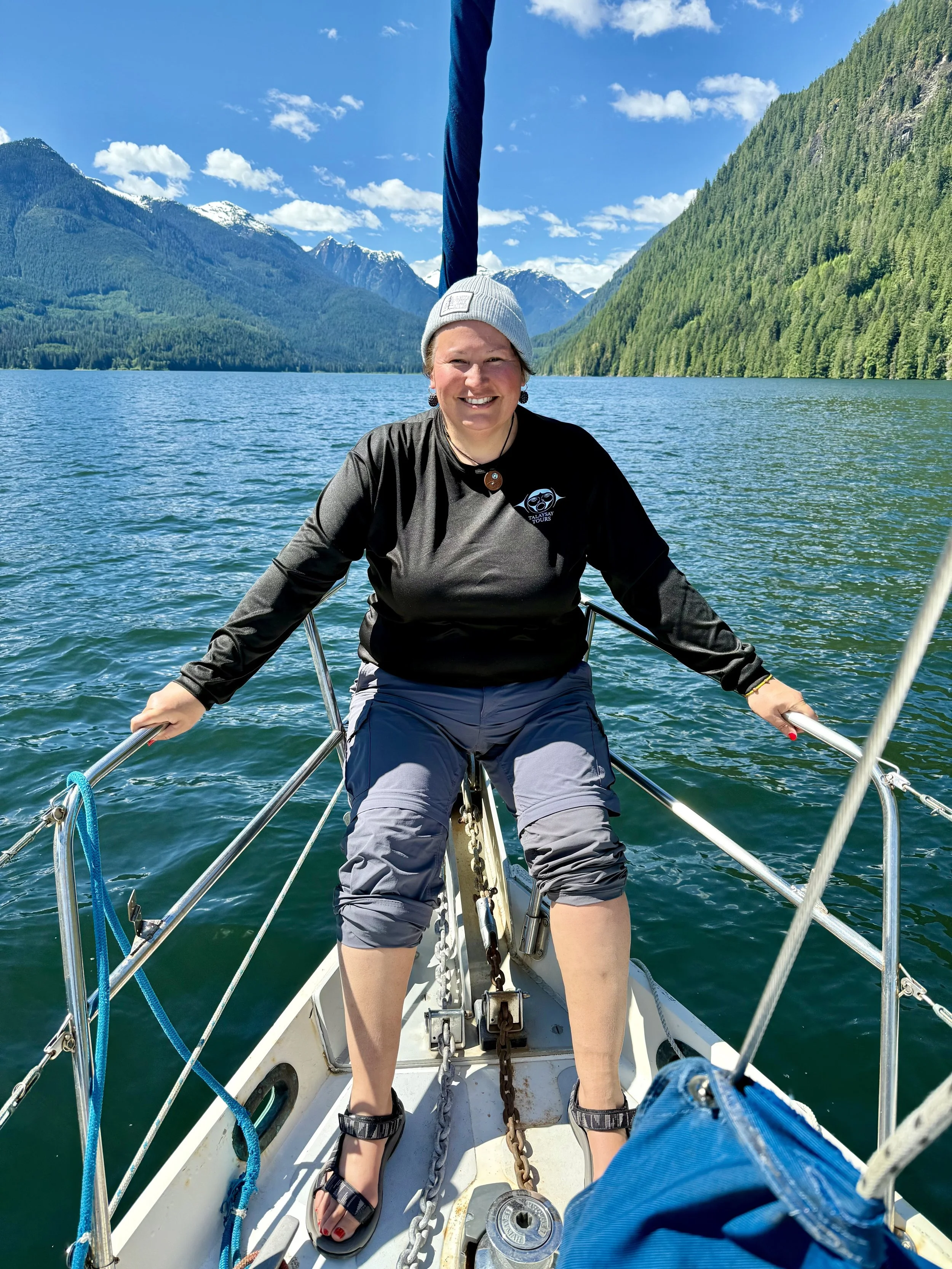
Photo: Candace at the bow of Kudlik
lekw’emin
On day two, we left ḵalpilin (Pender Harbour) and sailed northbound up the
Agamemnon channel to skweláwtxw
(Egmont) for a rendezvous with the whole team.
A dark thunderstorm closed the door to lekw’emin on that day, but fair winds welcomed us into the inlet the following morning. As we sailed deeper into the coast mountains, we shared stories and teachings, science and silence. We also made good use of the galley on board and were treated to an abundance of fine food. Hands up to all the cooks.
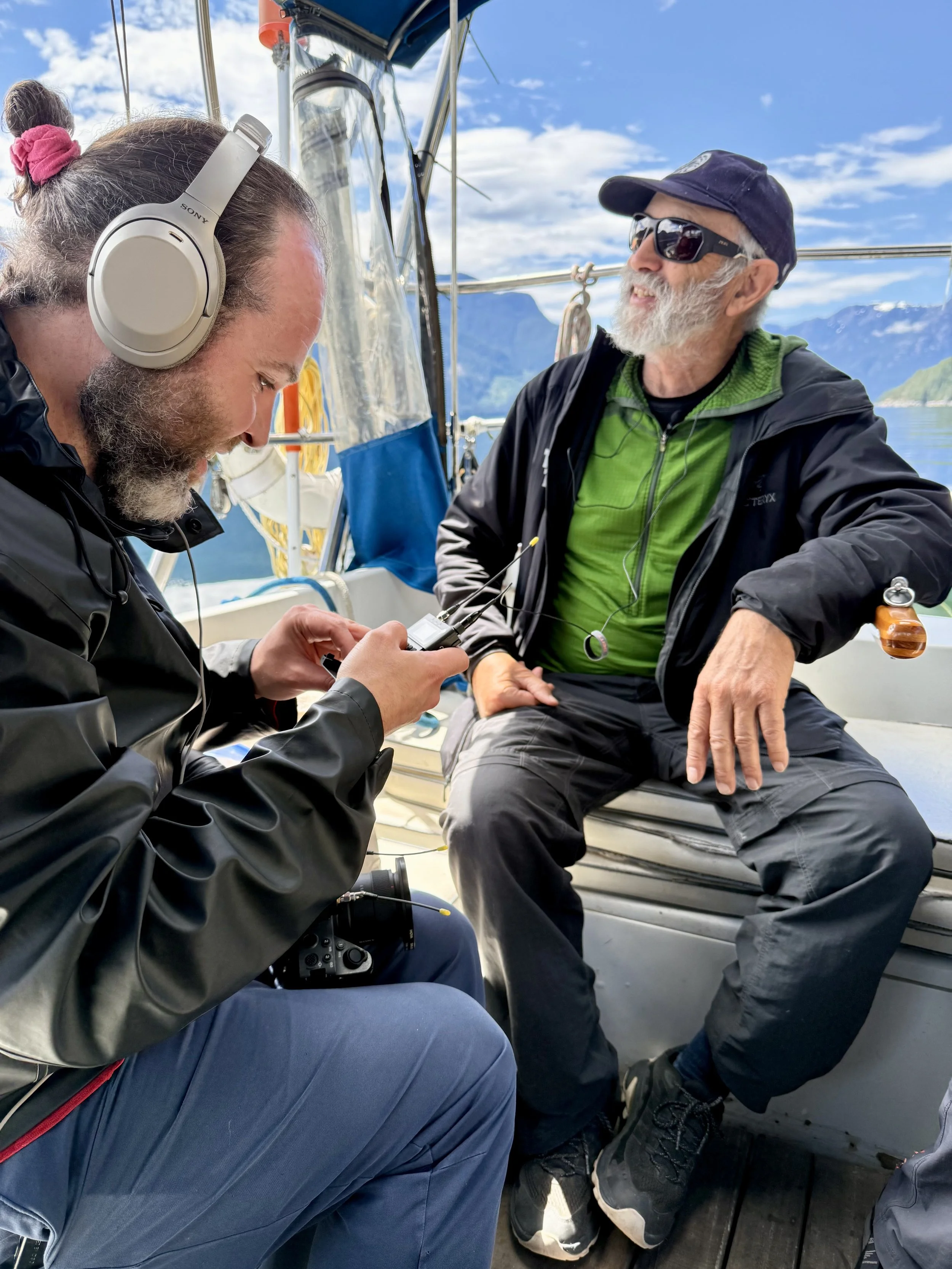
Photo: Trent recording Richard aboard Kudlik
x̱enichen
x̱enichen is the home to the wolf clan, who are also the people of the fish trap and the
ancestors of Candace and Talaysay.
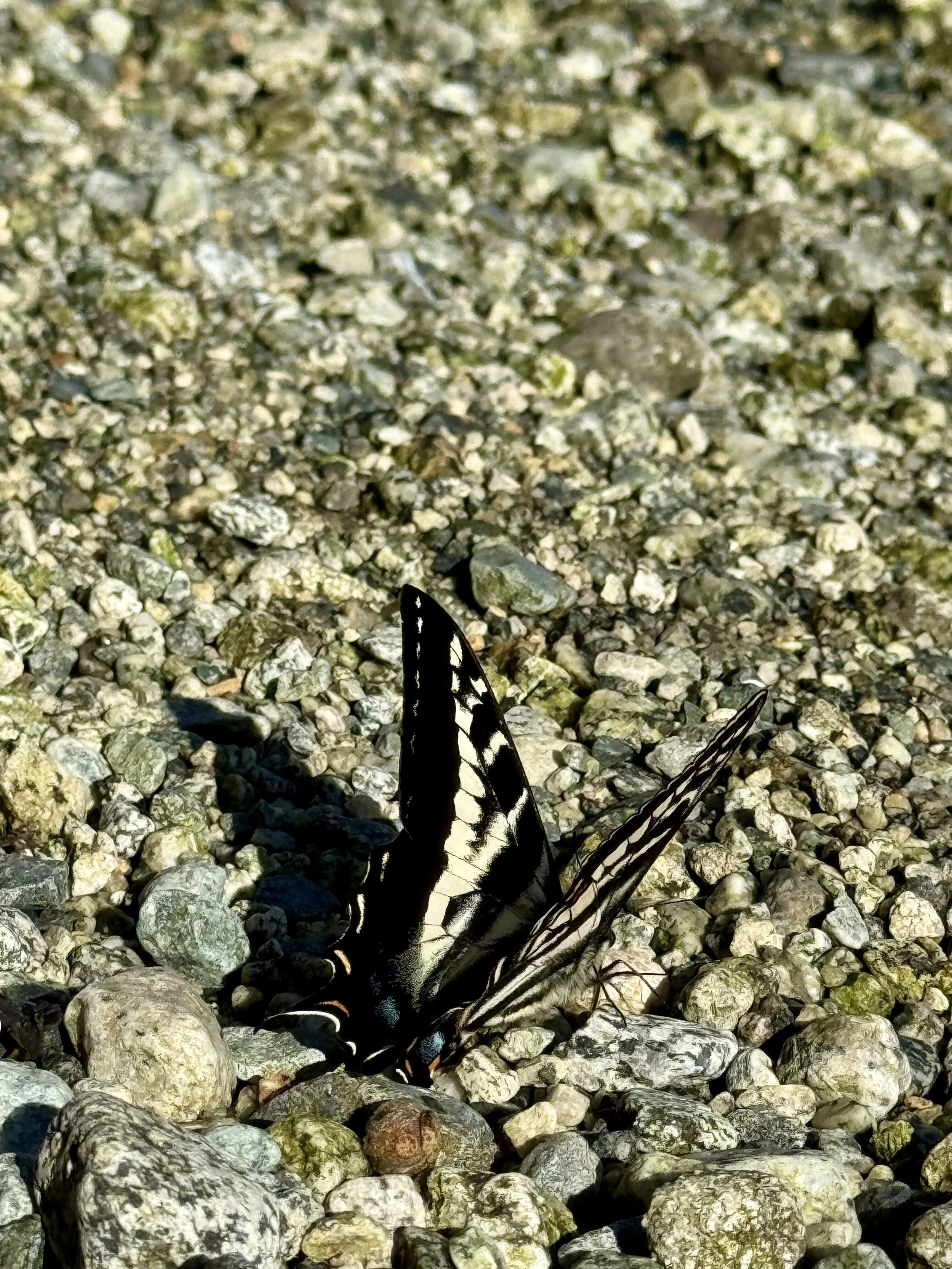
The village never disappoints. We were welcomed to the village by clouds of monarch and pale swallowtail butterflies that seemed happy to settle on any sunlit surface—even our shoulders. We visited the confluence of the skwawka and x̱enichen rivers where we were awed by the sight of a máyukw (grizzly bear) kill. We also took time to come to a deeper understanding of fish trap technologies and why this traditional approach to fish harvesting is sustainable through reciprocity, mutual respect and time-honoured design.
Photo: Butterfly encountered during the visit to x̱enichen
swiw̓élat
swiw̓élat (Princess Louisa Inlet) stole our hearts yet once again. The inlet was virtually
tourist free, the waterfalls were cascading in full force, and the towering rock walls
reflected a majesty and sacred presence that words cannot fully describe—as is often
said—you must be there and we fully immersed ourselves in the experience.
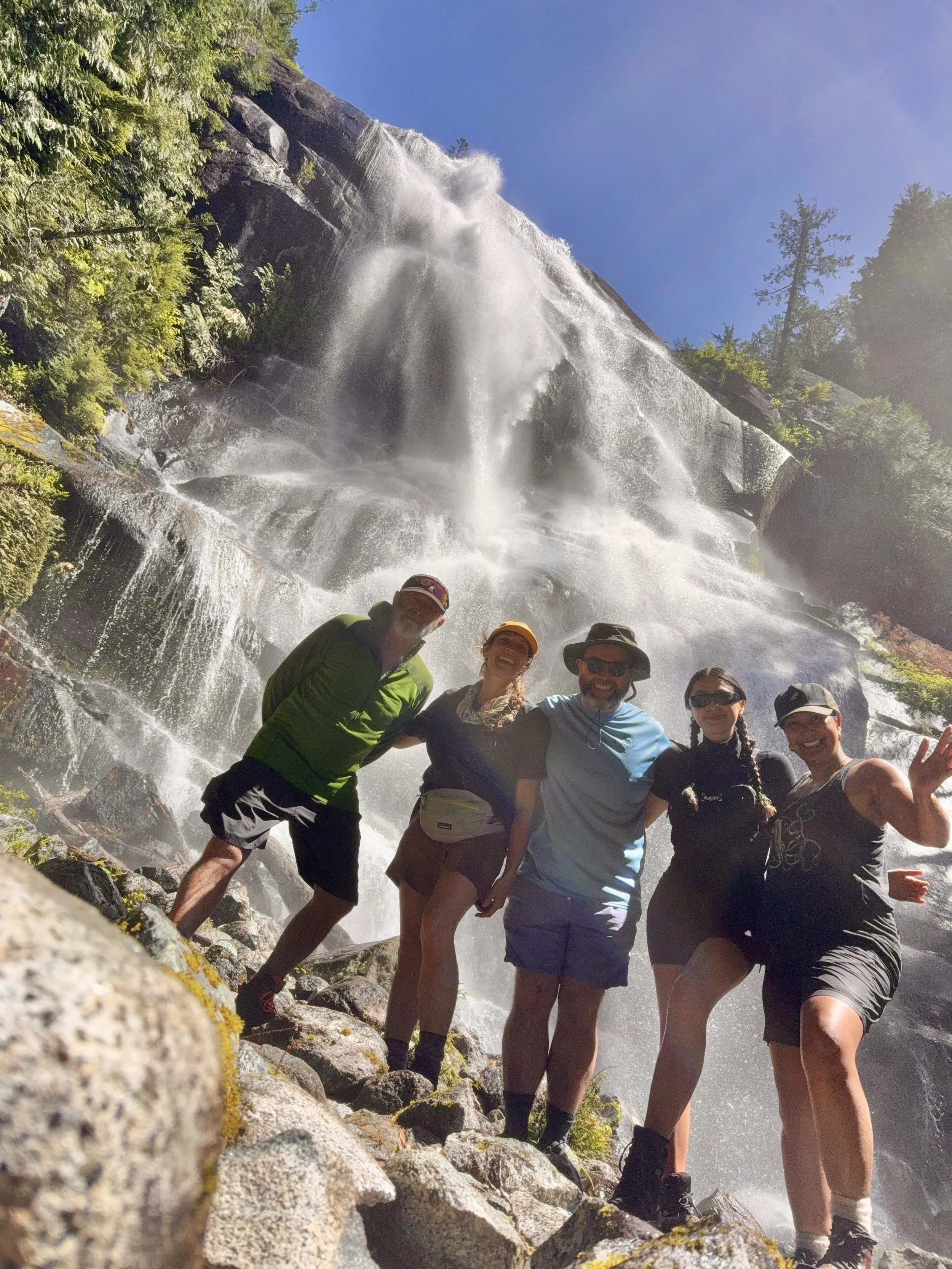
Our next challenge was self-imposed and well worth the effort—we hiked up to the waterfall at Trappers Cabin and took in the view. Our boat was set up to carry paddle boards and kayaks and in true Talaysay Tours style much happiness was found on the water and in the water. swiw̓élat is also known as a place to rest and restore—some of us are convinced there is no better place to experience a good night’s sleep.
Photo: The group at Trappers Cabin and waterfall
tsunay
Refreshed, sharing a profound sense of gratitude and a hint of sadness, we
transited the Malibu rapids, exited swiwelat into lekw’emin and set course for the village
of tsunay.
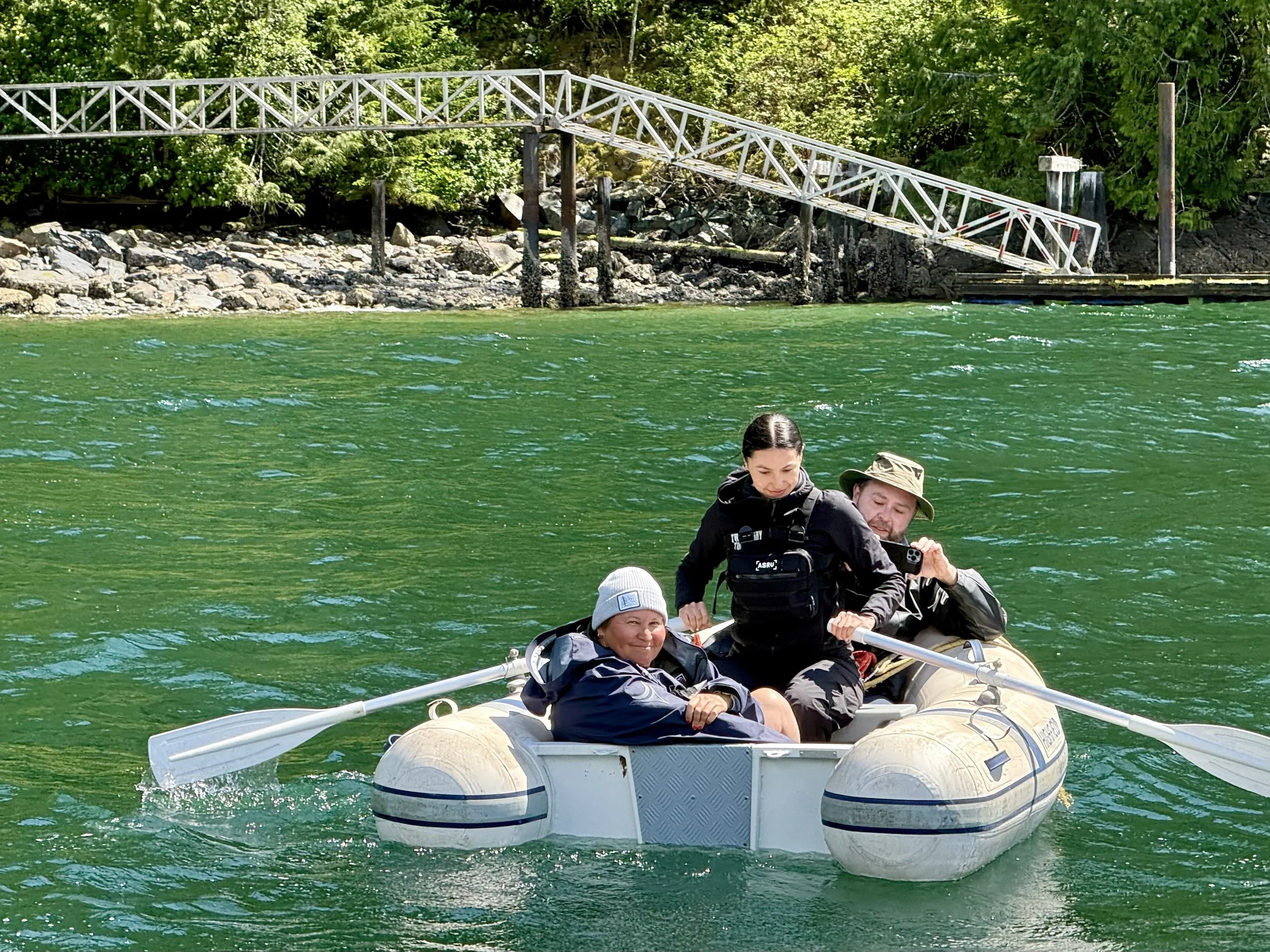
As Candace taught us, tsunay is the place of the toolmakers and hunters, it is also an ancestral home of her family. We set anchor in Deserted Bay and despite a strong inflow breeze Talaysay braved the waves and rowed the crew safely ashore and back.
Photo: Talaysay rowing the crew to shore
Each village, each place is a feast of oral tradition and a showcase for plants used
for food, medicine and technology, tsunay excels in stories of family history and
contemporary tales of logging and resilience in the face of colonial oppression.
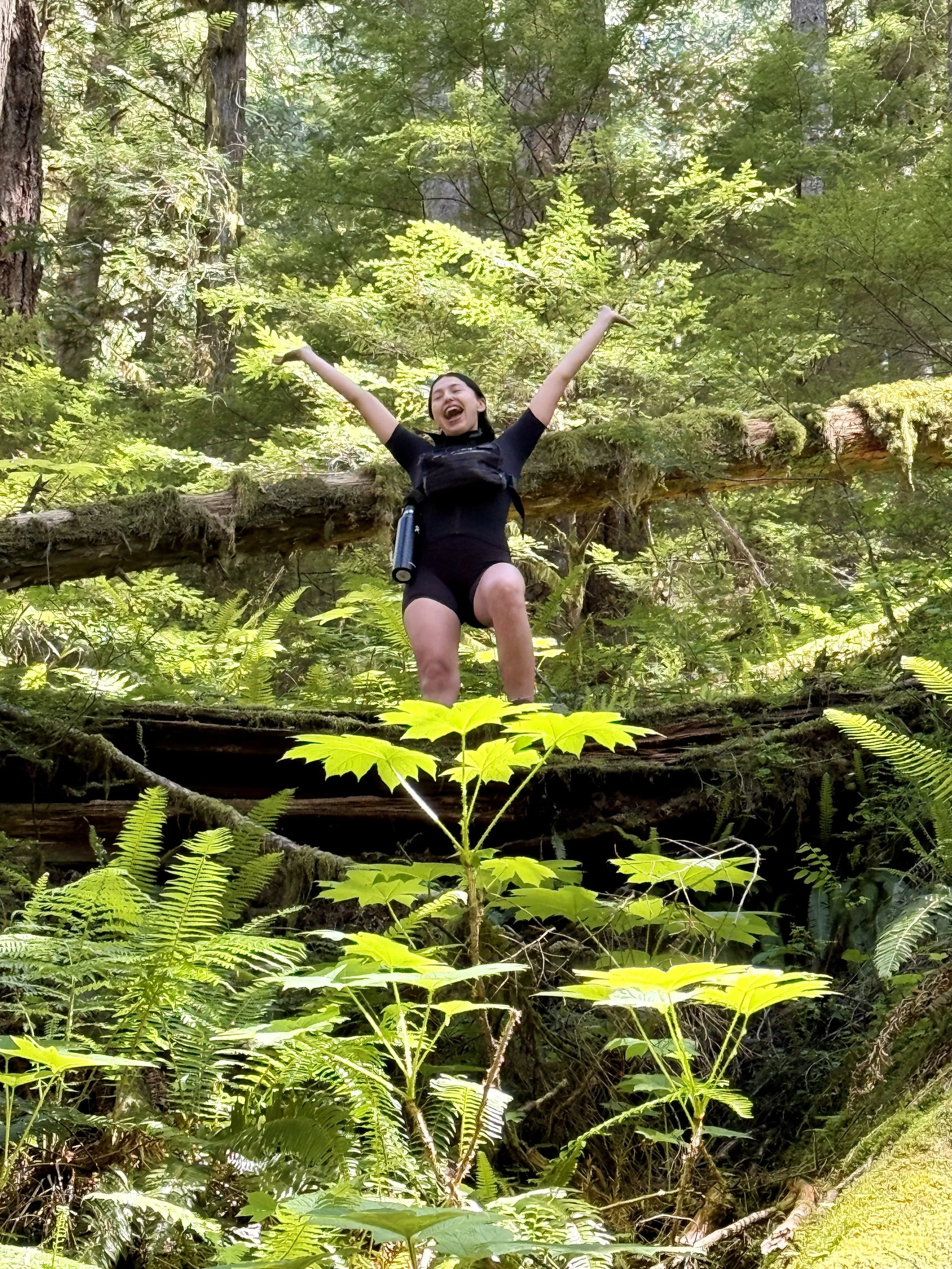
It is a place that holds a presence of immense strength married to gentle moments. The river is a river of salmon, and a river life.
Photo: Talaysay in the forest with Devil’s Club
s-xwítl’ay (mountain goat)
On our southbound trip were all cameras out when the team spotted a lone mountain goat who in his fullness of age had stayed down low by the water’s edge when the herd had moved up to their summer ranges. It was a rare, close and providential sighting at this altitude and will never be forgotten.
skwakwyíyam (Vancouver Bay)
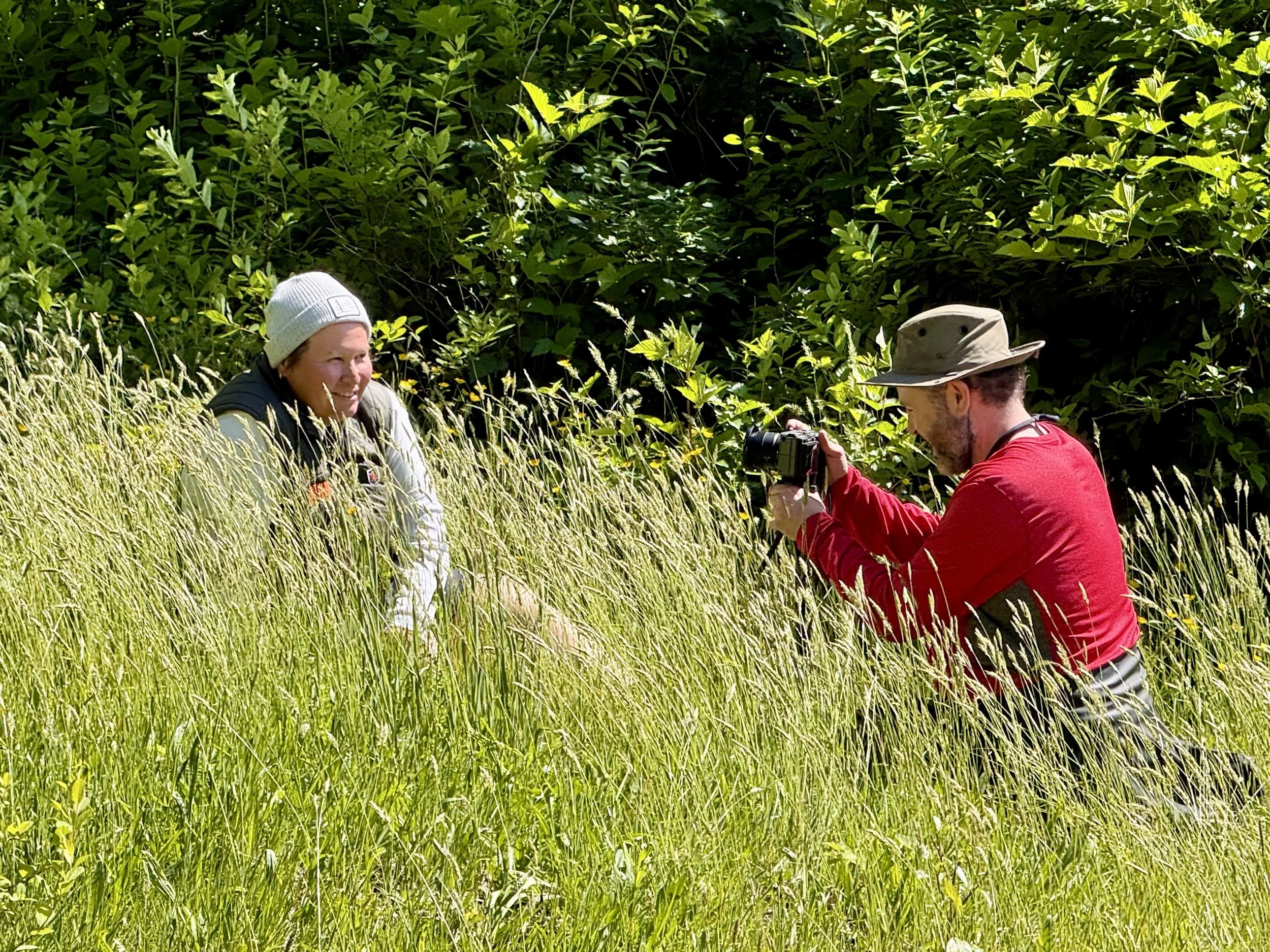
skwakwyíyam (Vancouver Bay) is also known as the place of the storyteller.
Even though time was running short we hiked up the Deserted Valley to the clean clear waters of the river. Once again, we were surrounded by a cornucopia of ethnobotanicals, stories and wonder. All too soon we were obliged to leave and return to the world lekw’emin—beyond this place of solace with all its teachings of “what has always been there.”
Photo: Candace during the journey through lekw’emin
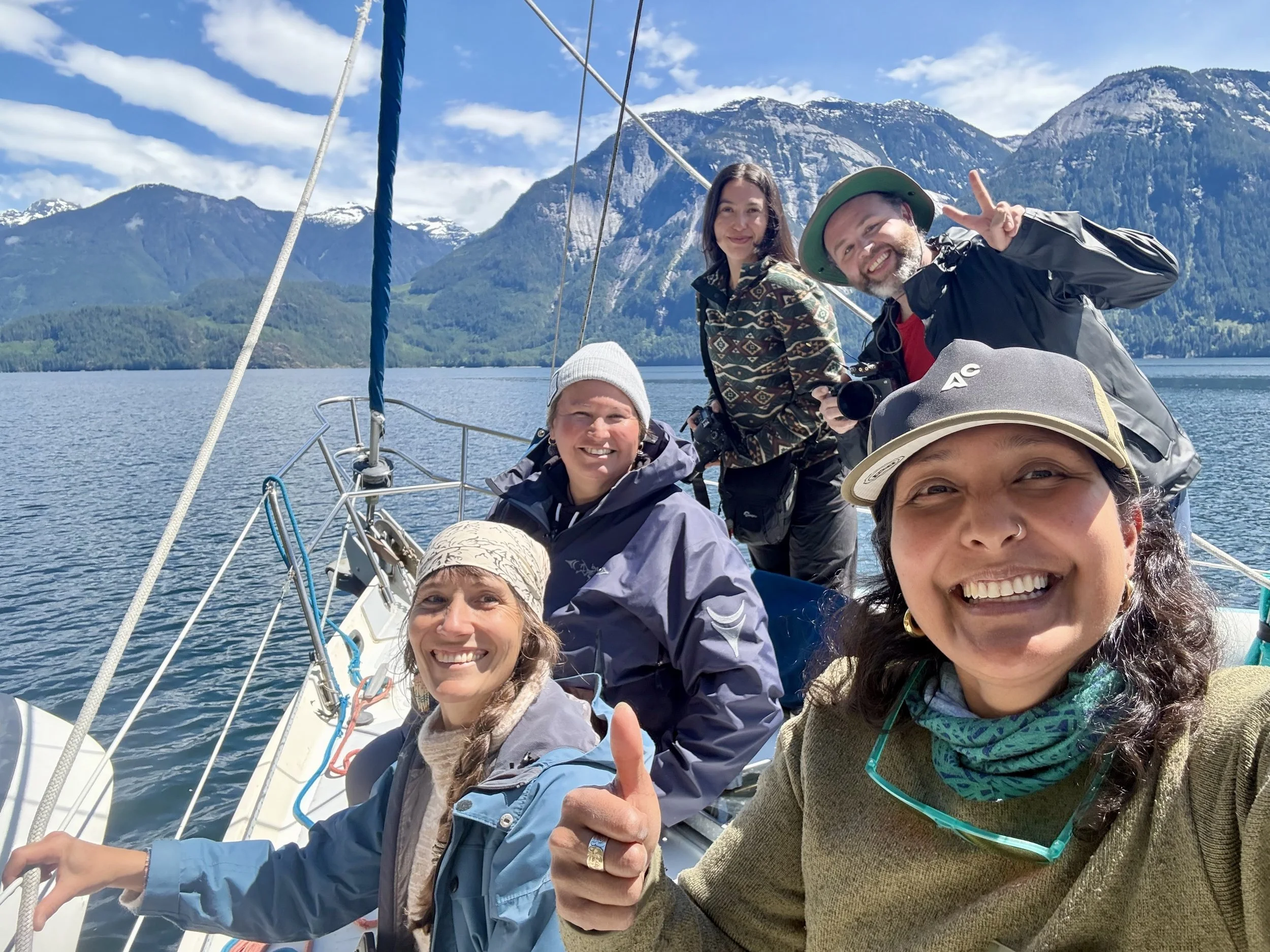
PS: every successful trip is built on rock solid logistics, concise communication and
everything else provided by our team on shore. A big and wholehearted ʔulnumsh
chalap (thank you) to each and every one of you.
Photo: The crew aboard Kudlik
About the Authors
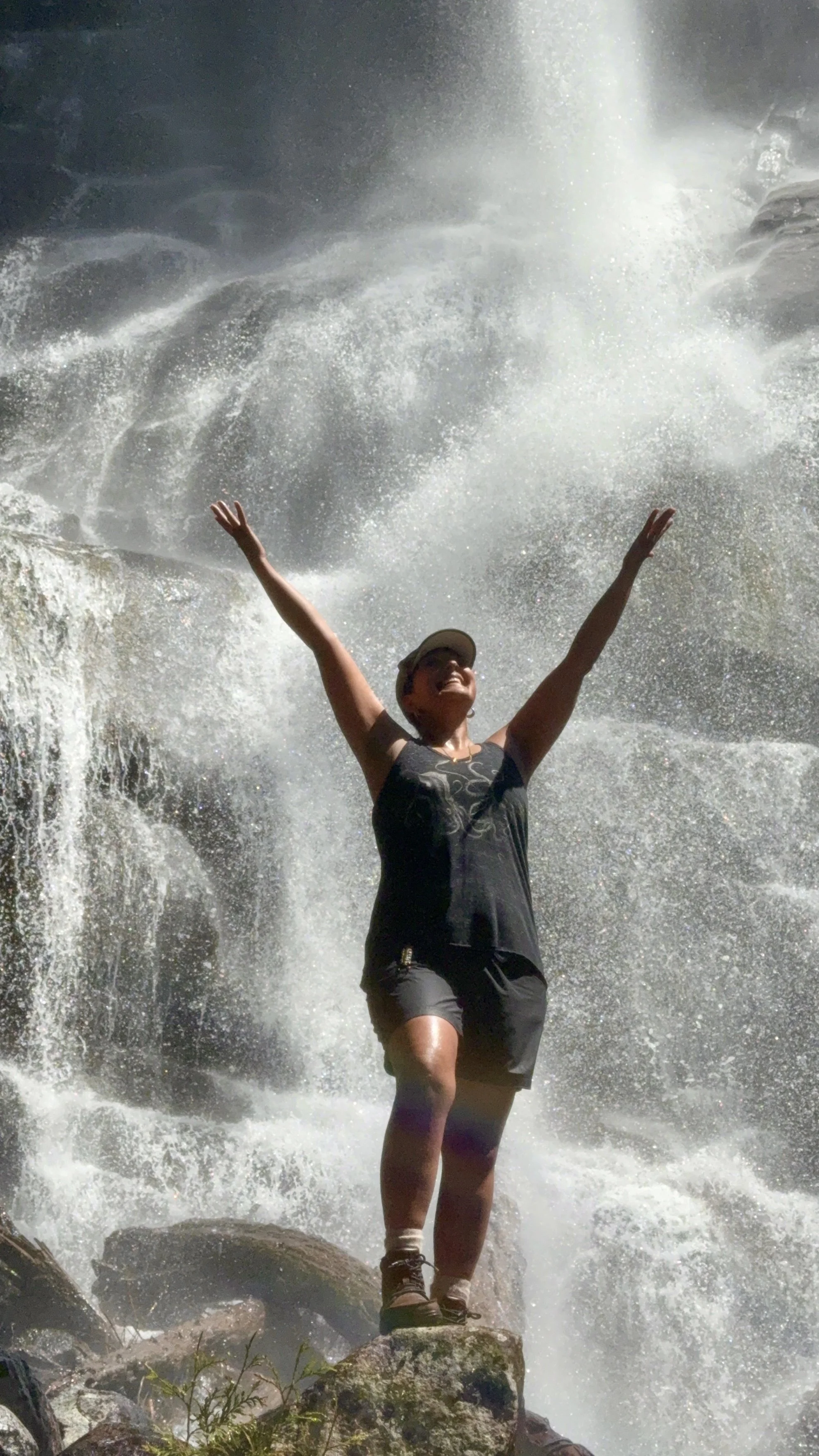
Ruby Banwait
Ruby is proud to be first generation Canadian of mixed racial ancestry, having been nurtured by the lands and waters of the Pacific Northwest for as long as she can remember. Ruby hopes to leverage her diverse work experience as an educator, marine biologist and communications specialist in her role with Talaysay Tours as a Cultural Ambassador or "intercultural knowledge bridger." A music enthusiast, thalassophile and self proclaimed fish geek, Ruby is deeply passionate about restoring abundance to the Salish Sea. She hopes to encourage others to create enduring relationships with nature as a means to support health and wellbeing.
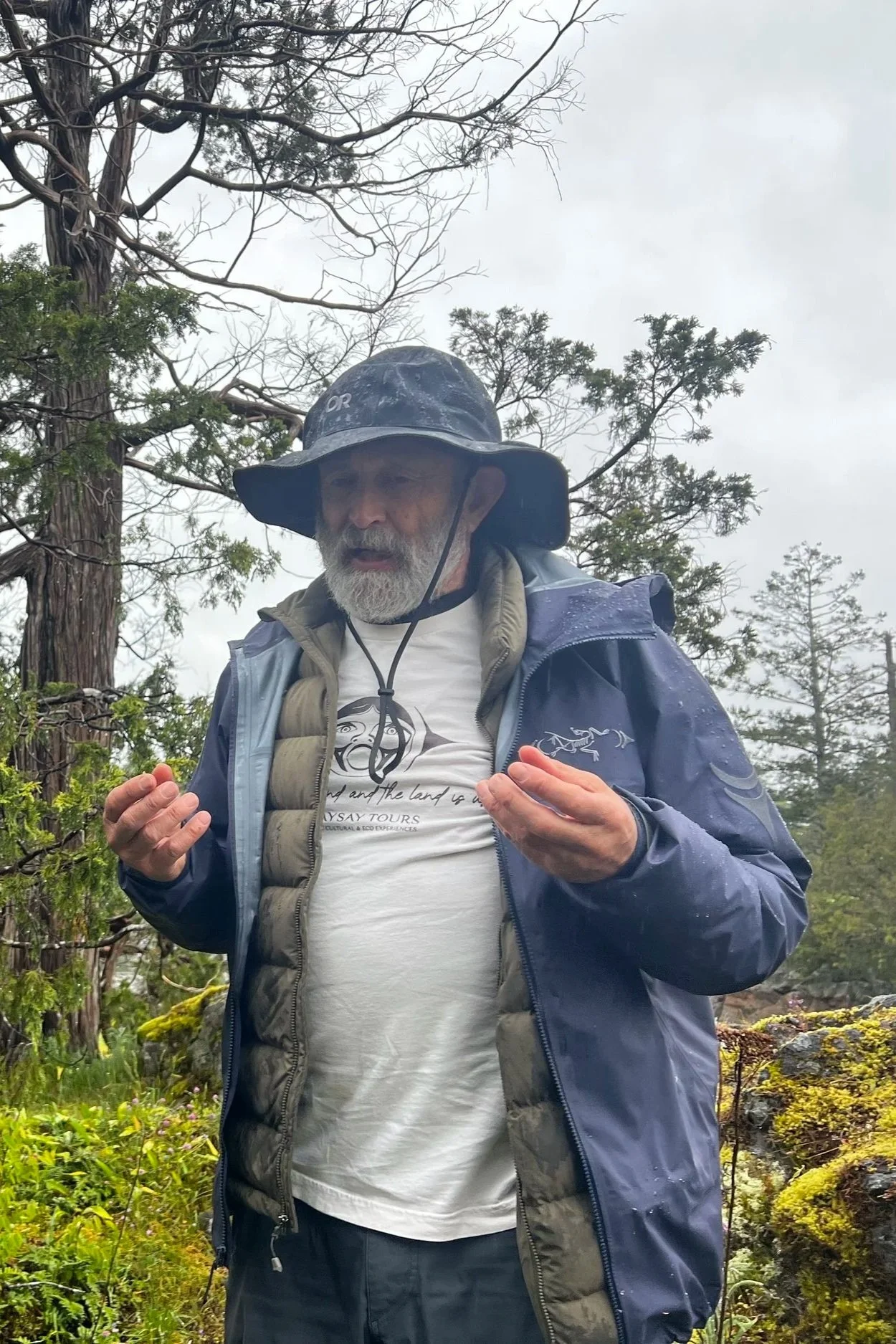
Richard C. Till
Richard, smanit stumish (Mountain Man), has over 35 years of experience in land-based learning, 25 in search and rescue and 30 in youth counseling. An adopted member of the shíshálh Nation, Richard is honored with the ancestral name smanit stumish for his dedication to youth in cultural rediscovery. He has spent decades learning from Elders to enrich his work with Indigenous communities. A skilled metalworker, boat builder, and artist, Richard is also in the process of publishing his first book, Woven Deep. He collaborates with Candace in delivering land-based education to schools and organizations across Canada, including the Jane Goodall Institute.
Image Credits
Journey photographs (1-16): Ruby Banwait, photographed throughout the shíshálh swiya.
Butterfly photograph: Talaysay Campo, x̱enichen / shíshálh swiya.
Ruby Banwait author portrait: Talaysay Campo, shíshálh swiya.
Richard C. Till author portrait: Candace Campo, Halfmoon Bay.